Budget $2,200–$8,100 for Foundation Repair: Read Quotes Right, Homeowners
Plan for $2,200–$8,100 typical foundation repairs. Learn to read contractor quotes line by line, budget inspections and financing, and use AI estimators...
By DealAnalyzerAI Editorial Team
Real estate investing education and deal-analysis research from DealAnalyzerAI.
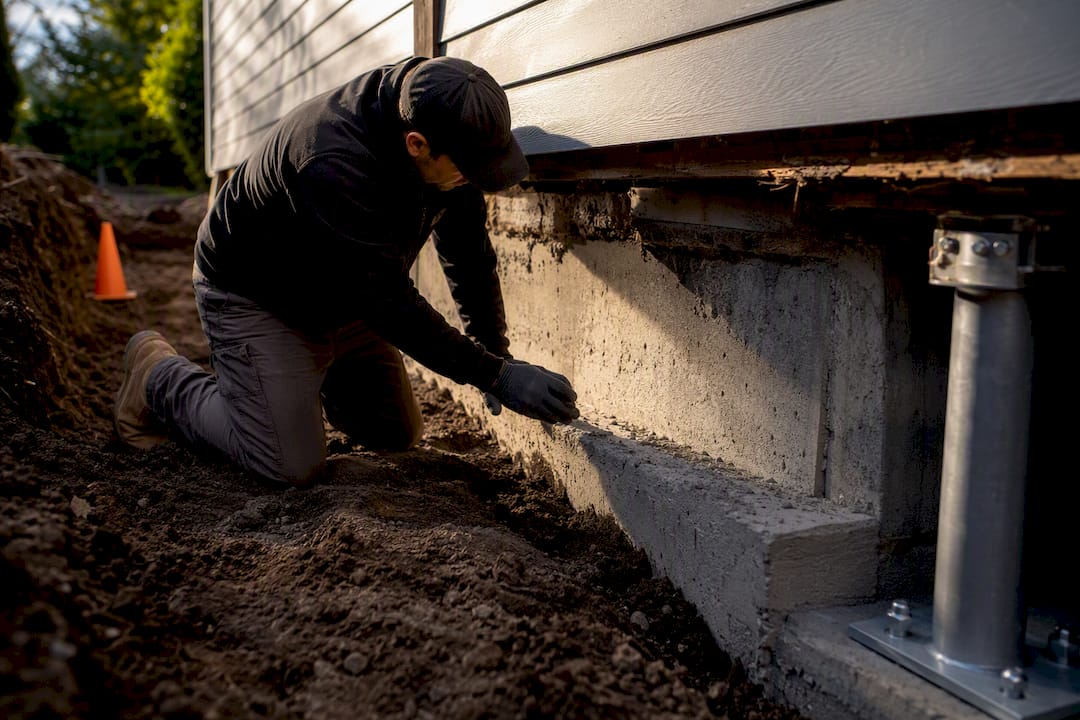
Budget $2,200–$8,100 for Foundation Repair: Read Quotes Right, Homeowners
Most homeowners pay between $2,200 and $8,100 for foundation repair, with a national average just over $5,000, though full replacements can run $20,000 to $100,000. Costs swing on severity, foundation type, soil conditions, and access. If you’re seeing new cracks, sticking doors, or sloping floors, book a structural engineer inspection before you budget anything else.
TL;DR:
- Foundation repair costs mostly depend on the severity of damage, foundation type, soil conditions, and site access, affecting whether the repair is minor or extensive.
- Most repairs fall between $2,200 and $8,100, with full replacements potentially reaching up to $100,000, and contractors quote using different pricing models like per pier or square foot.
- DIY repairs are limited to cosmetic cracks; structural movement signs like diagonal cracks or sloping floors require professional assessment and intervention.
- Insurance rarely covers foundation damage unless caused by sudden, documented events; homeowners should plan to pay out of pocket or use financing options.
- Proactive prevention, like proper drainage and regular inspections, significantly reduces long-term repair costs and mitigates ongoing soil movement issues.
Table of Contents
- What Does Foundation Repair Cost on Average?
- How Much Does Each Repair Method Cost?
- What Factors Push Your Repair Price Higher or Lower?
- How Do You Get an Accurate Foundation Repair Estimate?
- Can You Fix Foundation Cracks Yourself, or Do You Need a Pro?
- Will Insurance Cover Foundation Repair, and How Do You Pay for It?
- What Preventive Steps Lower Long-Term Foundation Costs?
- How Can AI-Assisted Estimators Speed Up Your Budgeting?
- Repair Now, Monitor, or Sell As-Is?
- [Get a Faster, More Reliable Budget Before You Call Contractors with guidance from One Day Doors & Closets on upgrading your home’s value to help understand the impact of foundation repairs on resale.](#get-a-faster-more-reliable-budget-before-you-call-contractors-with-guidance-from-one-day-doors-closets-on-upgrading-your-homes-valuehttpsonedaydoorsandclosetscomblogdallas-txupgrade-your-homes-value-to-help-understand-the-impact-of-foundation-repairs-on-resale)
- Where These Cost Ranges Come From
- Sources
- FAQ
What Does Foundation Repair Cost on Average?
Published averages vary more than you’d expect for the same basic problem, and that’s not a data error. It reflects three different things guides measure: the typical single repair job, the full project including drainage and finishing work, and the rare catastrophic fix that skews the mean upward.
NerdWallet puts the national average at just over $5,000, with a common range of $2,200 to $8,100. This Old House reports a nearly identical spread, $2,224 to $8,134, averaging around $5,179. Olshan Foundation Repair publishes a higher 2026 national average near $11,950, which likely reflects a heavier mix of underpinning and multi-pier jobs rather than small crack sealing. Angi lands in the middle, around $5,175.
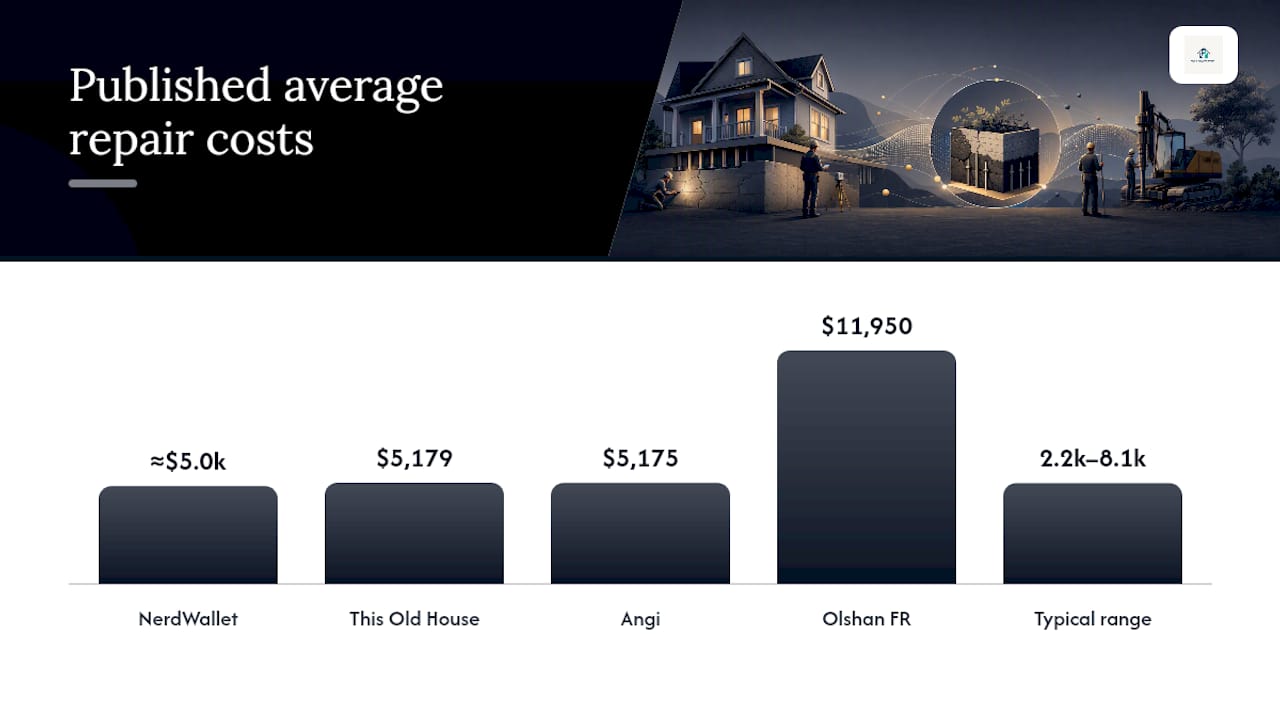
None of these numbers are wrong. They’re measuring different populations of jobs. A homeowner sealing one hairline crack and a homeowner underpinning a sinking corner both show up in “foundation repair” data, but their bills look nothing alike.
Low end: Cosmetic crack sealing, minor epoxy injection, small drainage fixes typically have lower costs. These jobs are quick, usually one visit, and rarely require permits.
Typical range ($2,200–$8,100): Slabjacking, a handful of piers, waterproofing a basement wall, or carbon fiber reinforcement on a bowing wall. This is where most homeowner repairs land.
High end: Full perimeter underpinning, house lifting, or foundation replacement on homes with severe settlement or failed slabs can be very costly.
Pricing models differ by method, too. Some contractors quote per square foot (common for slab work and waterproofing), others quote per pier (typical for underpinning), and some give a flat per-job price for smaller crack repairs. Ask which model your bid uses before comparing it to another contractor’s number, because a “$4,000” quote for eight piers is a very different deal than “$4,000” for four piers plus labor.
Here’s what typically drives a project toward the low or high side of these ranges:
- Number of cracks or affected walls versus a single isolated spot
- Whether the fix is cosmetic or requires structural underpinning
- Soil type and moisture history in your region
- Basement versus crawl space versus slab foundation
- Whether drainage or grading work is bundled into the same job
How Much Does Each Repair Method Cost?
Foundation contractors don’t all use the same fix for the same symptom, and the method matters more for your final bill than most homeowners realize. Here’s how the common approaches break down.
Slabjacking or mudjacking pumps a cement-based slurry beneath a sunken slab to raise it back to level. It is generally one of the less expensive structural fixes available. It works best on concrete slabs, patios, and driveways with modest settling, not on foundations with ongoing soil movement.
Polyurethane foam injection does the same job as mudjacking but with lightweight expanding foam instead of slurry. It costs more per job but cures faster and adds less weight to unstable soil, which can matter on a foundation that’s already struggling to support material.
Piering and underpinning installs steel or helical piers beneath the foundation to transfer weight to stable soil deeper down. Costs vary by pier type, with steel piers generally less expensive than helical piers. Multiply the expected pier count by your quoted per-pier price, then add waterproofing and landscaping restoration as separate line items, since most bids don’t fold those in automatically.
Carbon fiber strips or steel straps reinforce a bowing basement wall without full excavation. This is typically priced per linear foot and sits in the low to mid-range of most budgets, cheaper than underpinning but limited to walls that haven’t shifted structurally.
Waterproofing covers interior drainage systems, exterior membrane sealing, and sump pump installation. It’s frequently bundled with structural repair because water is the reason the foundation moved in the first place.
Full lifting or replacement is the outlier. This Old House notes lifting projects can run as high as $23,000, and NerdWallet places full replacement between $20,000 and $100,000.
Hidden costs cluster around three spots: landscaping and hardscape removal to access the foundation, drainage or French drain installation discovered mid-project, and equipment access fees if a crawl space or tight side yard requires specialized machinery.
What Factors Push Your Repair Price Higher or Lower?
Two houses with the same crack can get wildly different quotes, and the gap usually comes down to five variables working together rather than any single one.
Severity versus scope is the biggest swing factor. A single hairline crack calls for an epoxy fix. Multiple cracks, a sloping floor, and a stuck door together signal a scope that includes several piers, not one patch. Contractors price the whole problem, not the symptom you noticed first.
Foundation type matters because slab, crawl space, and basement foundations require different equipment and access strategies. Basement work often costs more per hour because of excavation, while crawl space repairs can cost more per pier because of restricted access for machinery.
Soil and drainage conditions decide how deep piers need to go and whether a soil report becomes mandatory rather than optional. Expansive clay soils, common across much of the country, cause repeat settlement if the underlying moisture issue isn’t addressed alongside the structural fix.
Access and equipment needs add cost when a foundation sits behind a fence, under a deck, or in a tight urban lot where heavy equipment can’t easily reach the work area.
Permits and local labor rates vary by city and state. Structural work almost always requires a permit, and inspection fees plus regional labor differences can shift a bid by a few hundred to over a thousand dollars compared to a similar job in a lower-cost market.
- Severity and number of affected areas
- Foundation type (slab, crawl space, basement)
- Soil composition and drainage history
- Site access for equipment
- Permit fees and local labor rates
Pro Tip: Add 15% to 20% on top of your written quote as a contingency buffer. Foundation contractors frequently find additional cracking or soil issues once they start digging, and a contingency line keeps a surprise from becoming a budget crisis.
How Do You Get an Accurate Foundation Repair Estimate?
A contractor’s walk-through estimate is a starting point, not a number to build a budget around. Getting a figure you can actually trust takes two more steps most homeowners skip.
A basic contractor assessment is often free or low-cost, but it’s also the least reliable number you’ll get, since the person quoting the job has an incentive to recommend their own fix. A structural engineer report typically costs within a moderate range and provides an independent assessment of structural conditions. A geotechnical or soil report may also be recommended depending on soil conditions, with costs varying accordingly.
The payoff for spending money upfront on a report is that it makes every contractor bid you collect afterward genuinely comparable, because they’re all pricing the same defined scope instead of each inventing their own version of the problem.
Before signing anything, request the following in writing:
- A breakdown by repair method (piers, waterproofing, drainage) rather than one lump sum
- The exact number of piers or linear feet included, not a rounded estimate
- Whether landscaping restoration and permit fees are included or billed separately
- A written warranty term and what voids it
- References from jobs completed at least two years ago, not just recent ones
Red flags include a bid that’s dramatically lower than every other quote you’ve collected, pressure to sign the same day, or a contractor who refuses to reference an independent engineer’s report if you have one. For investors specifically, a checklist for screening foundation issues before making an offer can help you decide how much weight a foundation problem should carry in your purchase decision.
Can You Fix Foundation Cracks Yourself, or Do You Need a Pro?
Not every crack is a crisis, and knowing the difference saves you from either overpaying for unnecessary work or underreacting to a real structural problem.
Shrinkage cracks from concrete curing are cosmetic. They’re usually thin, vertical, and consistent in width from top to bottom. These are reasonably fixable with a DIY epoxy injection kit costing $100 to $400, and they don’t indicate ongoing movement.
Diagonal or stair-step cracks, especially wider at one end than the other, usually point to structural movement. So do doors that stick seasonally, gaps between walls and ceilings, or floors with a noticeable slope. These need a professional evaluation, not a tube of caulk.
The bigger risk with DIY quick fixes is treating the symptom while ignoring the cause. Sealing a crack without addressing the drainage or soil movement behind it often leads to the same crack, or a worse one, reappearing within a year or two. This Old House specifically warns that mudjacking or surface sealing without fixing the underlying drainage tends to produce repeat problems.
- Cosmetic, hairline, vertical cracks: DIY epoxy kit, low urgency
- Diagonal, widening, or stair-step cracks: call a structural engineer
- Sticking doors, sloped floors, wall separation: schedule an inspection soon
- Active water intrusion with cracking: treat as urgent, not cosmetic
If cost is the barrier, staging repairs, tackling drainage and grading first, then structural work, can spread the financial hit without leaving the house structurally exposed in the meantime.
Will Insurance Cover Foundation Repair, and How Do You Pay for It?
Most homeowners pay for foundation repair out of pocket, and that surprises a lot of people who assume their homeowner’s policy has them covered. Standard policies typically exclude damage from gradual settling or normal soil movement, which describes the overwhelming majority of foundation problems. Coverage is more likely, though still not guaranteed, when damage results from a sudden, documented event like a burst pipe or a specific named peril, and only when the policy includes the right endorsement.
That gap between what homeowners expect and what policies actually pay is the single biggest budgeting surprise in this whole process.
Financing options homeowners commonly use:
- Home equity loans or HELOCs, which offer lower rates than unsecured borrowing
- Contractor in-house payment plans, often 12 to 60 months depending on the company
- Personal loans for smaller jobs under $10,000
- Cash reserves paired with a contingency line for surprises found mid-repair
Budget for permit and inspection fees on top of the repair quote itself, and set aside a contingency of 15% to 20% beyond the written bid, since foundation work regularly turns up additional scope once contractors start excavating.
What Preventive Steps Lower Long-Term Foundation Costs?
Prevention is consistently the cheapest line item in this entire guide, and it’s the one homeowners skip most often because the payoff isn’t immediate.
Grading your yard so water flows away from the foundation, extending downspouts several feet from the house, and installing a French drain in problem areas each cost a few hundred to a couple thousand dollars. Compare that to a $1,000 to $3,000 per-pier underpinning bill triggered by years of water pooling against the foundation, and the math isn’t close.
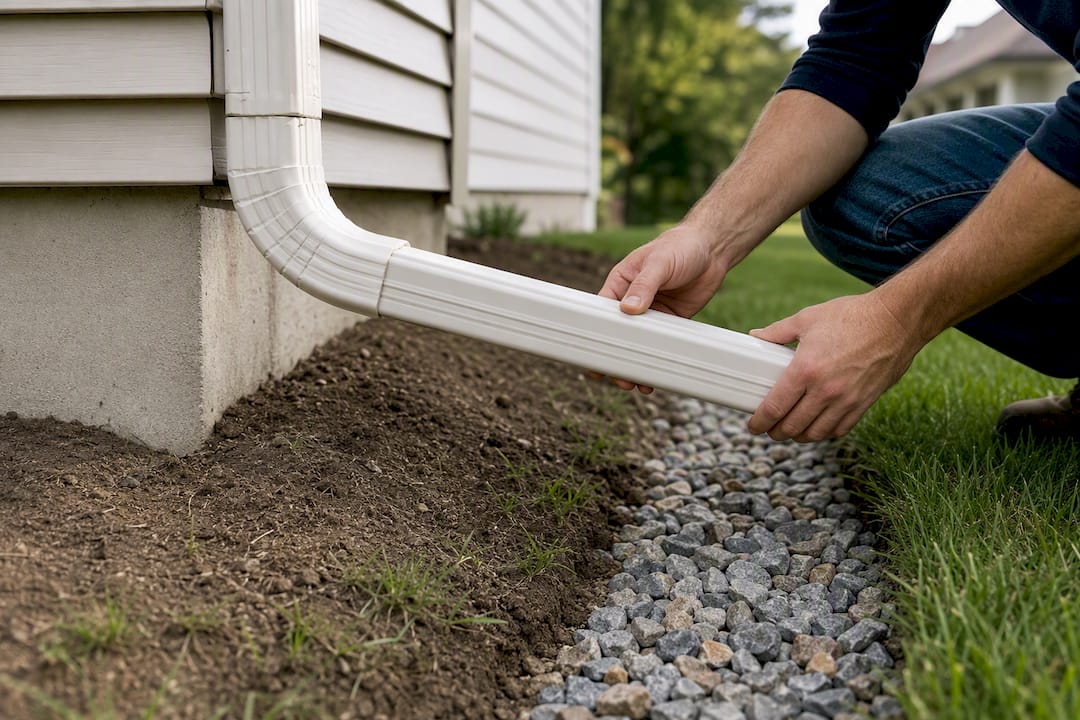
Tree roots near the foundation can also pull moisture unevenly from soil, contributing to the kind of shifting that eventually cracks a wall. Keeping large trees a reasonable distance from the foundation line reduces that risk over time.
A simple seasonal habit helps catch problems early:
- Check downspouts and grading twice a year, spring and fall
- Walk the foundation perimeter after heavy rain for pooling water
- Inspect interior walls and door frames for new cracks or sticking
Pro Tip: Keep a phone photo log of any existing cracks with a date stamp. If a crack grows or a new one appears, you’ll have proof of the timeline, which helps both with insurance disputes and with getting an accurate diagnosis from an engineer.
How Can AI-Assisted Estimators Speed Up Your Budgeting?
A structural engineer report tells you what’s actually wrong. An AI-assisted rehab estimator tells you, in minutes, what a realistic range looks like before you spend money on that report or collect contractor bids. Tools that analyze comparable sales and uploaded property photos can flag likely rehab line items and cost ranges, which gives homeowners and investors a working number to plan around early.
That early number matters most for investors comparing several properties in a week, where paying for a full inspection on every candidate isn’t practical. Use an estimator to screen and prioritize, then bring in a structural engineer once a property clears that first filter. For a deeper walkthrough of scoping rehab budgets before you talk to contractors, see how to estimate rehab costs like a professional investor.
Repair Now, Monitor, or Sell As-Is?
Run through this before deciding: How severe is the damage, and is it structural or cosmetic? Does it threaten safety or water intrusion? What does repair cost relative to your home’s value? Have you gotten an independent engineer’s read?
If cracks are diagonal, growing, or paired with sticking doors, get an inspection now. If they’re hairline and stable, monitor and reassess in six months. If repair costs approach a large share of the home’s value, get a second opinion before committing.
— Sam
Get a Faster, More Reliable Budget Before You Call Contractors with guidance from One Day Doors & Closets on upgrading your home’s value to help understand the impact of foundation repairs on resale.
Waiting on multiple contractor visits just to get a ballpark number costs you time you don’t have, especially if you’re screening several properties at once. There are tools that give you a working rehab budget in minutes instead of days, using analysis of comparable sales and uploaded property photos to flag likely repair costs and risk areas before you commit to a paid inspection or a formal bid.

The tool won’t replace a structural engineer’s stamped report, and it shouldn’t. What it does is give you a realistic early range so you know whether a foundation issue is a minor line item or a deal breaker before you spend money finding out the hard way. Some tools also calculate your maximum allowable offer and after-repair value side by side, so you can see how a foundation repair estimate actually affects your numbers.
Run your next property through the free rehab cost estimator or start with the full deal analysis tool to see ARV, repair costs, and risk flags together in one report.
Where These Cost Ranges Come From
The figures in this guide draw from four widely used industry sources, each measuring foundation repair costs slightly differently.
- NerdWallet for its conservative national average and full-replacement cost ceiling
- This Old House for method-specific pricing, including mudjacking and per-pier ranges
- Olshan Foundation Repair for detailed per-piling cost bands on underpinning systems
- Angi for aggregated averages and inspection/soil report cost guidance
Actual pricing varies by state, soil type, and local labor rates, so treat every range here as a planning baseline and confirm specifics with a licensed contractor or engineer in your area.
Sources
- Foundation Repair Cost in 2026: Is It Worth It? - NerdWallet
- How Much Does Foundation Repair Cost? (2026 Pricing) - This Old House
- Everything You Need To Determine The Cost of Foundation Repair - Olshan Foundation
- How Much Does Foundation Repair Cost? 2026 Data | Angi
FAQ
Is It Worth Fixing the Foundation of a House?
In most cases, yes, since unresolved foundation damage tends to worsen and can affect resale value and safety. If cracks are minor and stable, monitoring is reasonable, but active movement or water intrusion should be addressed rather than deferred.
How Much Does a Foundation Cost for a 2,000 Sq Ft House?
There’s no single per-square-foot number that applies universally, since foundation repair is typically priced per job, per pier, or per linear foot rather than by home size. Homes with typical settlement issues usually fall within the national average range of about $2,200 to $8,100, though a full replacement could run $20,000 to $100,000 depending on severity.
Will Insurance Pay for Foundation Repair?
Usually not. Standard homeowner policies exclude damage from gradual settling or normal soil movement, and coverage generally requires a sudden, documented event along with the right policy endorsement.
Is It Hard to Sell a House With Foundation Repairs?
Documented, professionally completed repairs with a transferable warranty are typically easier to sell than an unresolved foundation issue, since buyers and lenders want to see the problem was addressed by a licensed contractor rather than avoided.
Recommended
Analyze Your Next Deal with AI
Get an instant ARV estimate, rehab cost analysis, and deal score — free for 7 days.
Get Free Deal Breakdown