50% Owner Occupancy Risk for U.S. Investors: HOA Rules to Check
U.S. investors: avoid FHA loan blocks. Verify HOA rental bans, the 50% owner occupancy trigger, and resale documents before you close. Reprice with...
By DealAnalyzerAI Editorial Team
Real estate investing education and deal-analysis research from DealAnalyzerAI.

50% Owner Occupancy Risk for U.S. Investors: HOA Rules to Check
Yes, HOA rules can legally block or limit your rental strategy, through outright bans, rental caps, minimum lease terms, and tenant approval requirements enforced with fines and liens. Financing rules from HUD and Fannie Mae add another layer, tying your loan eligibility to the community’s owner-occupancy ratio. Before you write an offer, request the CC&Rs, the rental census, and the resale package. That paperwork tells you what you’re actually buying into.
TL;DR:
- Rental caps at 20% to 30% or outright bans can significantly delay or prevent leasing, impacting your ability to generate income or refinance.
- FHA and Fannie Mae require at least 50% owner occupancy, with even lower thresholds possible if reserves are strong, affecting your mortgage approval.
- HOA enforcement includes fines, liens, and lease denials, which can halt or complicate your leasing plans and lead to foreclosure risks.
- Reviewing the resale package, rental census, and community rules within the first 48 hours is crucial to identify deal-breaking restrictions early.
- Incorporating HOA fee, rental approval delays, and assessment risks into your analysis prevents overestimating property cash flow and maximum offer values.
Table of Contents
- How HOA Restrictions Affect Investors Before You Even Make an Offer
- Which HOA Rules Actually Matter to Investors
- How Financing Rules Tie Your Mortgage to the HOA’s Occupancy Ratio
- What Happens When HOA Rules Get Broken or Changed
- Your Due-Diligence Checklist Before You Close
- Negotiating Around HOA Restrictions Without Killing the Deal
- An Editorial Take on Screening HOA Deals Faster
- Model HOA Costs Before They Model Your Losses
- Sources
- FAQ
How HOA Restrictions Affect Investors Before You Even Make an Offer
Boards restrict rentals because investor ownership changes how a community functions financially and operationally. Owner-occupants show up to meetings, vote on budgets, and maintain their units with resale value in mind. Renters, statistically, don’t show the same engagement, and boards notice.
That gap matters more than it sounds. Lenders watch owner-occupancy ratios closely when deciding whether to approve financing for buyers in a condo or planned community, and a project with too many rental units can lose its approval status entirely, freezing out future buyers who need a mortgage.
For an investor, this creates a chain reaction worth understanding upfront:
- Higher investor concentration can trigger lender pullback on financing for the whole project, not just your unit.
- Boards facing financing or insurance pressure often respond by tightening rental rules, sometimes mid-ownership.
- A community that loses FHA or conventional approval becomes harder to resell to future investors, which drags down your exit options.
None of this means investing in HOA properties is a bad idea. It means the board’s incentives and yours don’t always line up, and you need to know that before you’re three months into escrow.
Which HOA Rules Actually Matter to Investors
Not every HOA restriction carries the same weight, and not every rule is equally hard to change. Understanding the categories helps you sort real deal killers from manageable friction.
- Outright rental bans. Some HOAs prohibit leasing entirely, aside from grandfathered owners. If the CC&Rs contain this language, walk away unless you plan to owner-occupy.
- Rental percentage caps. Many communities cap rentals at a fixed share of total units, often 20% to 30%. Once the cap fills, a waiting list forms, and new investors can wait months or years for a slot to open.
- Minimum lease terms. A rule requiring 6 or 12-month leases kills any short-term rental plan before it starts.
- Short-term rental bans. Increasingly common, these specifically target Airbnb-style stays regardless of lease length elsewhere in the rules.
- Owner-occupancy seasoning. Some HOAs require the owner to live in the unit for a set period, often one year, before leasing it out.
- Tenant or board approval. Even where leasing is allowed, the board may need to approve each tenant, adding time and uncertainty to your leasing timeline.
The durability of each rule depends on where it lives. Recorded CC&Rs typically require a supermajority owner vote and formal recording to change, making them stable but also hard to challenge. Board-adopted rules can shift with a simple board vote at the next meeting, which cuts both ways: easier to challenge, but also easier for a board to tighten without warning. Request the rental restriction details in the resale package, including the current rental census, waiting-list status, and any pending rental amendment.
How Financing Rules Tie Your Mortgage to the HOA’s Occupancy Ratio

HOA restrictions don’t operate in isolation. Federal lending guidance links your ability to finance a unit directly to how many renters already live in the building.
Owner-occupancy thresholds you need to know:
- FHA project approval generally requires at least 50% owner-occupancy in existing condo projects, per HUD Mortgagee Letter 2016-15.
- HUD may approve as low as 35% owner-occupancy under limited circumstances, and 30% for proposed or under-construction projects, when reserves and delinquency rates are strong enough to offset the risk.
- FHA generally won’t insure loans structured to let one investor accumulate multiple financed units as rentals, and HUD’s underwriting guidance sets dwelling-unit limitations for investor borrowers.
Fannie Mae has recently retired some investor-concentration limits for certain project review types under Lender Letter LL-2026-03, while raising reserve-study and replacement-reserve requirements. That sounds like good news for investors, but presale and owner-occupancy requirements at the project level still apply, so a high renter ratio can still block your financing even where the concentration cap itself no longer does.
If you’re financing through FHA, the flip rule and appraisal timelines add another layer worth checking before you assume a fast close.
What Happens When HOA Rules Get Broken or Changed
Enforcement is where HOA restrictions stop being theoretical and start hitting your cash flow. Boards have real teeth, and they use them.
- Fines accumulate for unauthorized rentals, often daily until you comply.
- Liens attach to the property for unpaid fines or assessments, and in extreme delinquency cases can lead toward foreclosure risk.
- Lease denial can happen even after you’ve signed a tenant, if the board rejects the application after the fact.
- Special assessments get levied to cover reserve shortfalls or legal costs, sometimes triggered by disputes with investor owners.
Changing the rules yourself is possible but slow. Amending recorded CC&Rs typically requires a supermajority owner vote, often two thirds, plus formal recording with the county. Board-adopted rules move faster but offer less protection since the next board can reverse them just as easily.
Your Due-Diligence Checklist Before You Close
Treat the resale package request as non-negotiable, not a courtesy. Here’s what to collect and why each document matters to your underwriting.
- CC&Rs and current rules. Confirm whether rental restrictions are recorded (durable) or board-adopted (changeable).
- Resale package. This usually includes fee history, litigation disclosures, and the rental cap status.
- Current rental census. Tells you exactly how close the community is to any rental cap.
- Board meeting minutes, 12 to 24 months back. Look for discussion of pending rule changes or rental disputes.
- Reserve study. A weak reserve fund raises special-assessment risk and can jeopardize FHA project approval.
- Recent special assessment history. A pattern of assessments signals financial stress you’ll eventually help pay for.
Ask the management company directly: Is the rental cap reached? How long is the waiting list? Are any rental amendments pending a vote? Their answers should feed straight into your offer price, not just your comfort level.
Pro Tip: Build a placeholder line item into your underwriting for “HOA rental delay” even when the cap isn’t full. A three-month wait for board approval on a tenant is a real vacancy cost, not a rounding error.
Negotiating Around HOA Restrictions Without Killing the Deal
When the HOA’s rules complicate but don’t kill your plan, reprice before you retreat. Factor the monthly HOA fee, which commonly runs $200 to $600 depending on amenities, plus expected vacancy while you wait for tenant approval, into your offer.
- Ask the seller for a written timeline on board approval, or request a temporary waiver if one is available.
- Negotiate a seller credit if the rental slot isn’t currently open, since you’re absorbing the delay they created by listing without disclosing it.
- Explore whether your unit qualifies for grandfathering under an older, less restrictive version of the rules.
Walk away when the cap is frozen with a long waiting list, the board is openly hostile to investors, or the reserve study shows a community heading toward a large special assessment. No negotiation fixes structural risk like that.
Pro Tip: If short-term rentals are banned but long-term leasing isn’t, compare the cash flow difference between strategies before assuming the deal doesn’t work anymore. Sometimes it still does, just at a lower return.
An Editorial Take on Screening HOA Deals Faster
Most investors treat HOA review as paperwork to skim after they’ve fallen in love with the numbers. That’s backwards. Pull the CC&Rs and resale package in the first 48 hours, and treat unresolved rental restrictions as a hard deal killer unless you can document a real path to leasing. Optimism isn’t a due-diligence strategy. Reprice with real numbers instead.
— Sam
Model HOA Costs Before They Model Your Losses
Traditional underwriting treats HOA fees as a fixed line item and stops there, which is exactly how investors get blindsided by a frozen rental cap or a surprise special assessment. Dealanalyzerai builds those variables directly into your deal analysis, using AI-driven ARV ranges, rehab cost estimates from property photos, and risk flags that surface issues before you make an offer.
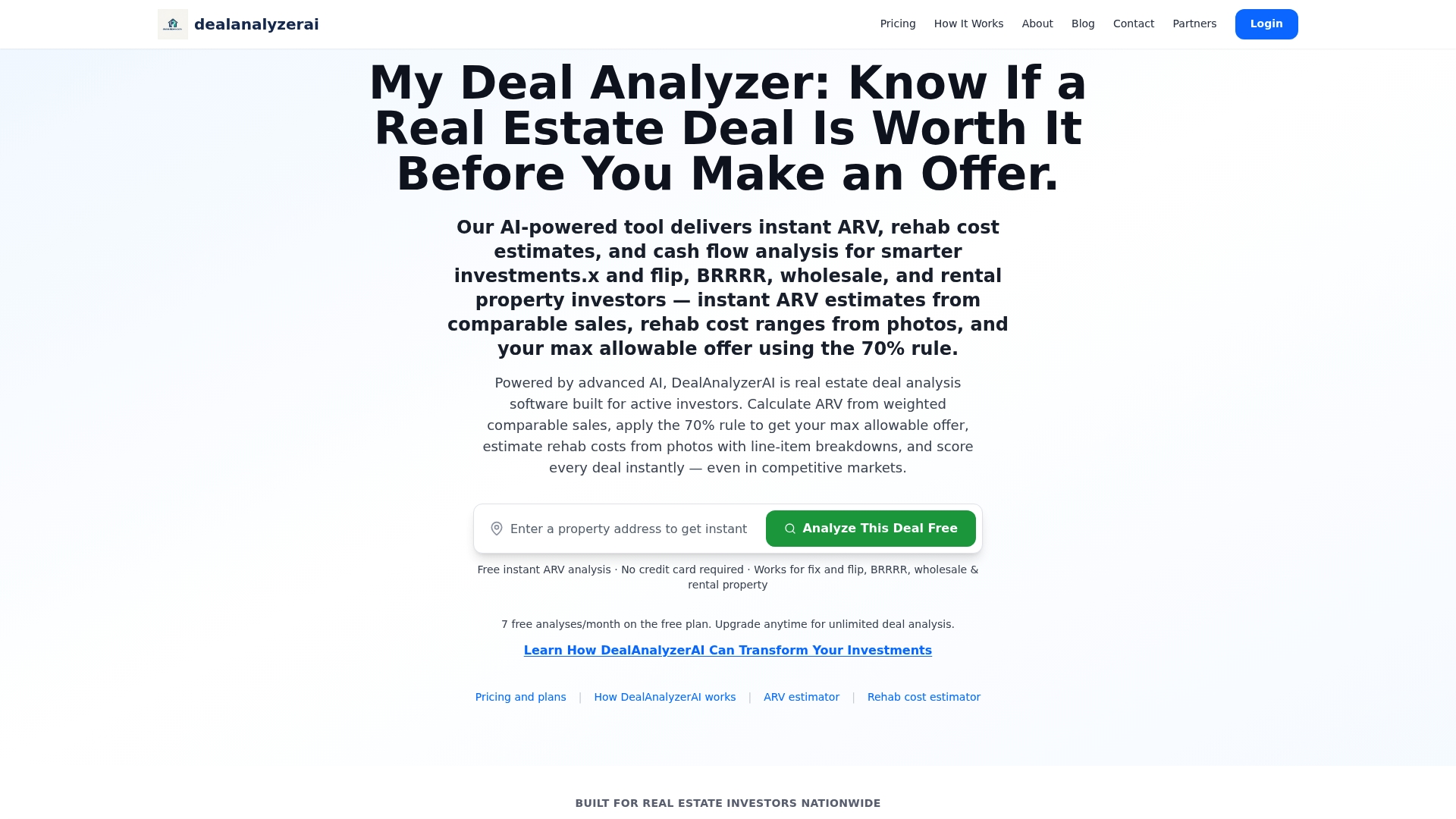
Run the numbers with your HOA fee, your expected days to tenant approval, and the likelihood of a special assessment factored in. The output adjusts your maximum allowable offer and cash-flow projection accordingly, instead of leaving you to guess. Test it against a live deal on the property analysis calculator or check current plans on the pricing page before your next offer goes out.
This article is general information, not a substitute for advice from a qualified financial advisor. Consult a qualified financial professional about your own circumstances before acting on anything here.
Sources
- HUD Mortgagee Letter 2016-15 (HOTMA implementation) — condominium project approval
- Fannie Mae Lender Letter LL-2026-03 / Selling Guide updates
- HOA rental restrictions: what investors need to know — AskDoss
FAQ
Can You Invest in HOA Funds?
No, “HOA funds” typically refer to a community’s reserve and operating accounts, not an investment product open to outside investors. What you can do is invest in real property within an HOA community, subject to the community’s rental rules and financing requirements.
Can an HOA Kick Out an Owner?
An HOA generally cannot evict an owner outright, but it can force a sale through lien foreclosure if fines and assessments go unpaid long enough. This is a real risk for investors who ignore fines on unauthorized rentals, since liens can escalate to foreclosure in extreme delinquency cases.
Why Are HOAs So Restrictive Toward Investors?
HOAs restrict investors mainly because higher renter concentration can hurt owner-occupancy ratios, which lenders use to decide whether to approve financing for the whole project. A drop in owner-occupancy below FHA’s baseline can strip a community of loan approval, hurting resale value for every owner, so boards tighten rental rules to protect that threshold.
What Documents Should I Request Before Buying in an HOA?
Request the CC&Rs, current rules, resale package, rental census, and 12 to 24 months of board meeting minutes before making an offer. These documents show whether rental restrictions are recorded and durable or board-adopted and changeable, plus whether the community is near its rental cap.
How Can DealAnalyzerAI Help With HOA-Restricted Deals?
Dealanalyzerai lets you factor HOA fees, expected leasing delays, and special-assessment risk directly into your ARV and maximum allowable offer calculations. Pricing starts with a free plan, with the Premium plan at $97 per month for full deal analysis features.
Recommended
Analyze Your Next Deal with AI
Get an instant ARV estimate, rehab cost analysis, and deal score — free for 7 days.
Get Free Deal Breakdown