RTP Real Estate: Find Listings and Evaluate Deals
Explore real estate rtp listings and strategies for buyers and investors. Discover key resources and evaluate your next investment in RTP.
By DealAnalyzerAI Editorial Team
Real estate investing education and deal-analysis research from DealAnalyzerAI.
RTP Real Estate: Find Listings and Evaluate Deals
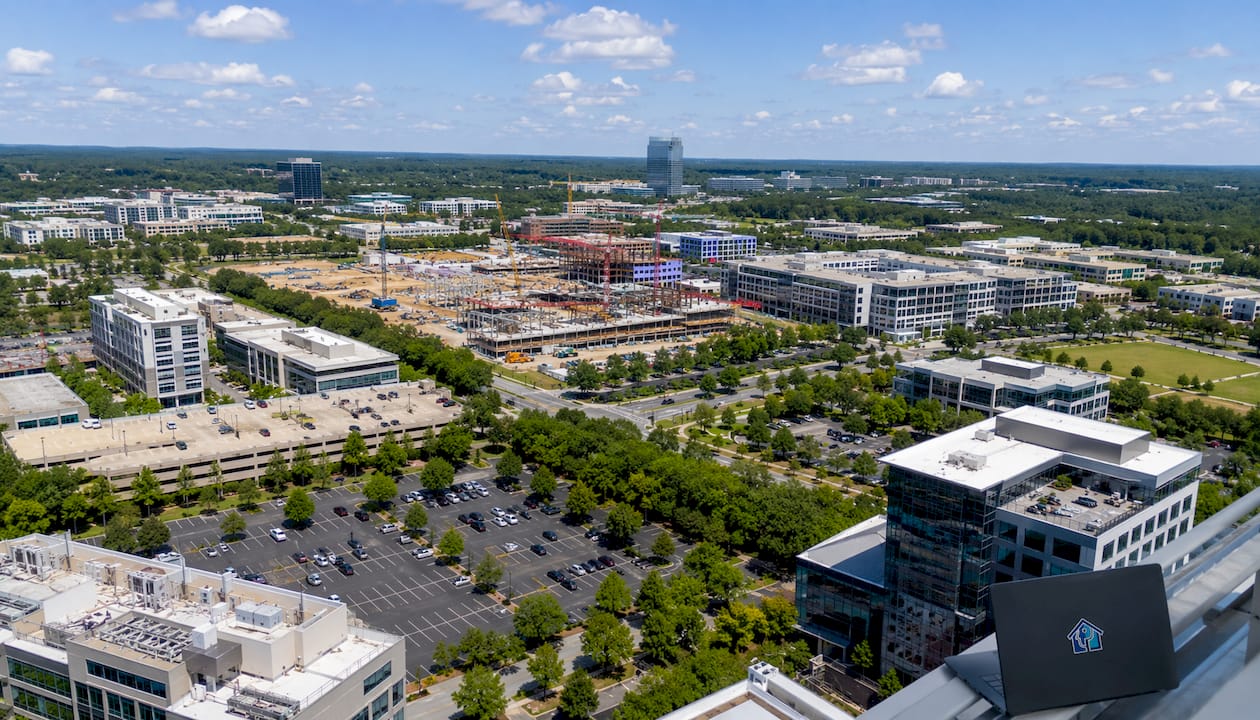
For residential listings around Research Triangle Park, start with Zillow and Realtor.com. For commercial and lab space, go directly to the Research Triangle Foundation and major campus owners like Alexandria Real Estate Equities. The market is shifting fast: RTP 3.0 was recently approved, opening the Park to mixed-use and limited residential development for the first time.
Your three immediate actions:
- Residential buyers and investors: Search Zillow or Realtor.com using a 5–10 mile radius from Hub RTP (Durham/Cary/Raleigh zip codes). Confirm the listing’s actual municipality before proceeding.
- Commercial and lab tenants: Visit the Research Triangle Foundation’s real estate page and Hub RTP’s buildings directory, then email realestate@rtp.org for current availability and preleasing timelines.
- Investors screening deals: Run any shortlisted property through a deal analyzer before committing to an LOI or offer.
Table of Contents
- What does the RTP real estate market look like right now?
- How do you find residential properties serving the RTP area?
- What commercial and lab space is available in RTP, and how do you lease it?
- What do RTP 3.0 and Park covenants mean for investors and occupiers?
- How should you evaluate an RTP property before committing?
- Where do you find live listings and the right contacts?
- Key Takeaways
- Why RTP is one of the most interesting markets to watch right now
- Screen RTP deals faster with Dealanalyzerai
- Useful sources to consult
- FAQ
What does the RTP real estate market look like right now?
RTP sits in a strong seller’s and landlord’s market: residential inventory near the Park is tight, while commercial lab and office space is transitioning from a single-use campus model toward a mixed-use district with phased availability.
| Segment | Inventory / Availability | Price / Lease Guidance | Size Bands | Primary Source |
|---|---|---|---|---|
| Residential (RTP-area) | Active listings across Durham, Cary, Raleigh | Varies by municipality; check live portals | 2–5 bed single-family, condos, townhomes | Zillow, Realtor.com |
| Multifamily / Apartments | Cortland at RTP: 1-bed from $1,250/mo | a range of rents for 1- to 3-bedroom units | — | Cortland at RTP |
| Office / Lab (existing) | Immediate and preleasing | Market-rate NNN; contact leasing teams | 10,000+ sq ft | Research Triangle Foundation |
| Hub RTP mixed-use | Preleasing and phased delivery | Contact leasing for current terms | Office towers, retail, multifamily | Hub RTP buildings page |
Scale signal: RTP spans 7,000 acres and hosts 55,000+ employees across more than 385 companies, making it a major research park. That employment base is the primary demand driver for both residential and commercial real estate in the corridor.
Hub RTP, a 100-acre mixed-use redevelopment within the broader Park, is the focal point for new inventory. Many Class A commercial listings sit on the Park’s periphery; Hub RTP is where new mixed-use product is concentrated.
How do you find residential properties serving the RTP area?
RTP itself is not a municipality. Homes marketed as “RTP-area” are typically located in Durham, Cary, Morrisville, or Raleigh. Both Zillow and Realtor.com aggregate these listings effectively, but you need the right filters.
Recommended search setup:
- Set a 5–10 mile radius centered on Hub RTP (4000 Sancar Way, Durham, NC 27709)
- Filter by property type: single-family, townhouse, condo, or small multifamily (2–4 units)
- Include Durham County and Wake County to capture both sides of the Park
- Add school district filters if you have dependents or are targeting tenant demographics
Neighborhoods along NC-54 and the Cornwallis Road corridor consistently appear in RTP-area searches. Durham’s Hope Valley and Cary’s Preston neighborhoods attract RTP employees at different price points. For multifamily investors, Morrisville and the RTP periphery offer small apartment complexes worth screening for duplex and small multifamily opportunities.
Pro Tip: Many listings use “RTP” as a marketing label even when the property sits well outside Park boundaries. Before making an offer, confirm the actual street address against Durham County or Wake County GIS maps. If proximity to a specific employer campus matters, measure the drive time yourself rather than relying on listing copy.
When in doubt, call a local broker. Long & Foster Real Estate operates in the Research Triangle region and can verify whether a listing is genuinely RTP-adjacent or simply using the brand.
What commercial and lab space is available in RTP, and how do you lease it?
The Research Triangle Foundation and Alexandria Real Estate Equities are the two primary owners and operators you need to know. The Foundation controls the land and covenants; Alexandria focuses on purpose-built lab infrastructure with specialized MEP systems suited to life-science tenants.

| Property Type | Availability | Lease Guidance | Size Bands | Covenant / Permitted Use | Key Amenities | Timeframe |
|---|---|---|---|---|---|---|
| Residential (RTP-area) | Active listings | Varies by municipality | 2–5 bed | Standard municipal zoning | Standard | Immediate |
| Lab-ready / life-science | Immediate + preleasing | NNN; contact leasing | 10,000+ sq ft | RTP covenants apply; ECC or RND zone | Specialized HVAC, exhaust, power, loading | 6–18 mo fit-out |
| Office / corporate campus | Immediate + preleasing | NNN market rate | 5,000+ sq ft | ECC zone typical | Parking, fiber, amenity access | 3–12 mo fit-out |
| Hub RTP mixed-use | Preleasing / phased | Contact Hub RTP leasing | Office towers + retail + multifamily | MUN zone under RTP 3.0 | Hotel, retail horseshoe, amenities | Phased delivery |
Lab tenants should plan for longer timelines than standard office. Core requirements include heavy HVAC and exhaust capacity, high electrical load (often 200–400 watts per sq ft for advanced lab), chemical-resistant flooring, and loading dock access. Tenant improvement allowances vary by landlord and lease term length; negotiate these before signing a letter of intent.
Leasing vs. buying in RTP: most commercial transactions are leases. Outright land sales do occur through the Research Triangle Foundation, but they require covenant review and Foundation approval. For preleasing at Hub RTP buildings, contact the leasing team directly through the buildings directory.
What do RTP 3.0 and Park covenants mean for investors and occupiers?
RTP has always operated under historic covenants that supersede standard municipal zoning. What changed in 2026 is significant: RTP 3.0 was unanimously approved, creating three new land-use types and formally permitting mixed-use and residential development inside the Park for the first time.
The RTP 3.0 Vision Plan defines the three land-use types:
- ECC (Enhanced Corporate Campus): Traditional research and corporate campus uses, with updated design standards. Most existing large-footprint tenants fall here.
- RND (Residential Neighborhood Development): Permits residential uses within the Park, a genuinely new option that opens multifamily and mixed residential development.
- MUN (Mixed-Use Node): Allows retail, hospitality, office, and residential in combination. Hub RTP is the primary example of this type.
“The Research Triangle Foundation emphasizes that historic covenants govern what can be built and how land is used within RTP — and RTP 3.0 updates those covenants to enable the next generation of development.”
Landowners and developers can now submit applications under RTP 3.0. The first step is contacting the Research Triangle Foundation directly at realestate@rtp.org. Plan for longer approval lead times than standard municipal permitting; covenant review adds a layer that most developers outside RTP do not encounter.
How should you evaluate an RTP property before committing?
The single most important question for any RTP property is fit-for-purpose: does the site’s covenant classification, utility capacity, and physical configuration match your intended use? A building zoned ECC with insufficient power cannot become a wet lab without significant capital and Foundation approval.
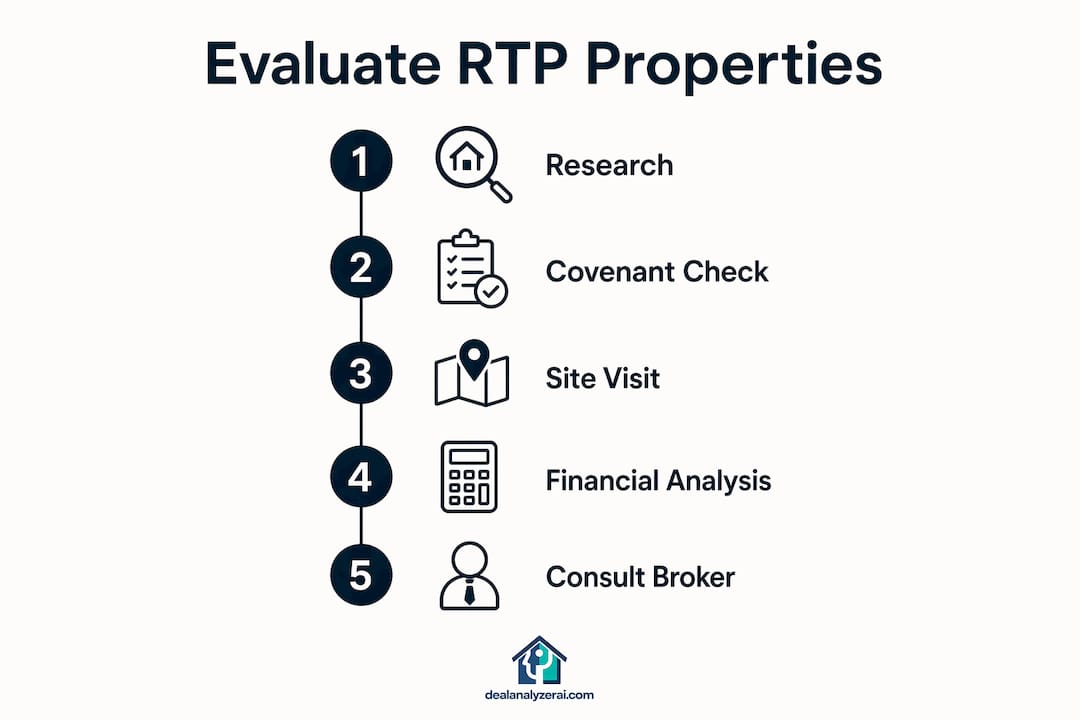
Due diligence checklist:
- Confirm the RTP 3.0 land-use classification (ECC, RND, or MUN) and what it permits
- Review the specific covenant restrictions with the Research Triangle Foundation before signing anything
- Assess utility capacity: electrical load, MEP systems, HVAC tonnage, and exhaust capacity
- Verify parking ratios and loading dock access against your operational requirements
- Commission a Phase I environmental assessment, especially for older campus buildings
- Get a written estimate for tenant improvement or fit-out costs and timeline from a local contractor
Questions to ask the leasing team or seller:
- What prior uses has this space had, and are there any outstanding covenant approvals?
- What is the tenant improvement allowance, and what does it cover?
- What is the realistic fit-out timeline from lease execution to occupancy?
- Are there maintenance fees, common area maintenance (CAM) charges, or shared infrastructure costs?
Red flags specific to RTP: listings that use “RTP” in the address but sit outside Park boundaries; buildings with inadequate power for lab use marketed as “lab-ready”; hidden easements tied to Foundation infrastructure; and covenant restrictions that limit signage, exterior modifications, or subletting.
Transaction timeline: Typical RTP lease: initial search (2–4 weeks) → site tours and shortlist (2–4 weeks) → LOI (1–2 weeks) → lease negotiation and covenant review (4–8 weeks) → fit-out (3–18 months depending on lab complexity) → move-in. Purchase transactions add title search and Foundation approval steps; budget 6–12 months for complex acquisitions.
A solid property investment risk assessment framework helps you prioritize these steps and avoid costly surprises.
Where do you find live listings and the right contacts?
Residential listings:
- Zillow: Broad residential inventory with photos, sales history, and map-based search. Use the draw tool to define a custom search area around the Park.
- Realtor.com: MLS-sourced accuracy with neighborhood market snapshots. Useful for verifying days on market and price history.
- Long & Foster Real Estate: Regional brokerage with local agent network across RTP-adjacent municipalities. Engage them when you need hands-on representation or off-market leads.
Commercial and lab leasing contacts:
- Research Triangle Foundation: realestate@rtp.org; lists buildings including 4000 Sancar Way and Frontier RTP, plus land-for-sale inquiries.
- Hub RTP buildings directory: hub.rtp.org/buildings for current preleasing and availability by building.
- Alexandria Real Estate Equities: Contact through their leasing team for life-science campus space.
Pro Tip: For commercial deals, engage a tenant representative broker early. Tenant reps are paid by the landlord, so their services cost you nothing, and they have direct relationships with Foundation leasing contacts and campus owners. Verify their RTP transaction history before signing a rep agreement.
For off-market residential opportunities around RTP, direct mail campaigns targeting Durham and Cary zip codes adjacent to the Park consistently surface deals before they hit the portals.
Key Takeaways
RTP real estate rewards preparation: the right listing source, a covenant check, and a fast deal analysis separate strong opportunities from costly mistakes.
| Point | Details |
|---|---|
| Start with the right source | Use Zillow or Realtor.com for residential; contact Research Triangle Foundation for commercial and lab space. |
| RTP 3.0 changes the rules | Approved in 2026, RTP 3.0 permits mixed-use (MUN), residential (RND), and enhanced campus (ECC) development inside the Park. |
| Covenants override zoning | Always review RTP covenant classification before signing an LOI; Foundation approval adds lead time to any transaction. |
| Lab fit-out timelines are long | Budget 3–18 months for fit-out depending on lab complexity; negotiate tenant improvement allowances upfront. |
| Dealanalyzerai speeds screening | Run RTP residential and small commercial deals through Dealanalyzerai to get fast ARV, MAO, and rehab cost estimates before committing. |
Why RTP is one of the most interesting markets to watch right now
RTP has operated as a single-use research campus for decades. The unanimous approval of RTP 3.0 in 2026 is not a minor policy update. It is a structural shift that opens one of the most land-constrained, talent-dense corridors in the Southeast to residential and mixed-use development.
For investors, the opportunity is real but narrow. The covenant layer means you cannot simply buy a parcel and build what the market demands. You need Foundation alignment, the right land-use classification, and patience for approval timelines that standard municipal deals do not require. Investors who skip the covenant review and assume standard Durham or Cary zoning applies will waste months and legal fees.
The most interesting near-term plays are multifamily and lab-office hybrid conversions near Hub RTP, where the MUN classification creates genuine mixed-use density for the first time. A 20,000–50,000 sq ft lab conversion in this zone requires confirming ECC or MUN status, assessing MEP capacity, and modeling the fit-out cost against current NNN lease rates. That analysis takes time to do manually across multiple properties.
Screen RTP deals faster with Dealanalyzerai
Manually running ARV estimates and rehab cost projections across a shortlist of RTP properties takes hours. Dealanalyzerai cuts that to minutes. Upload property photos and the tool’s AI analyzes renovation costs directly from the images, calculates your maximum allowable offer, and flags risk factors before you commit to a site tour or LOI.
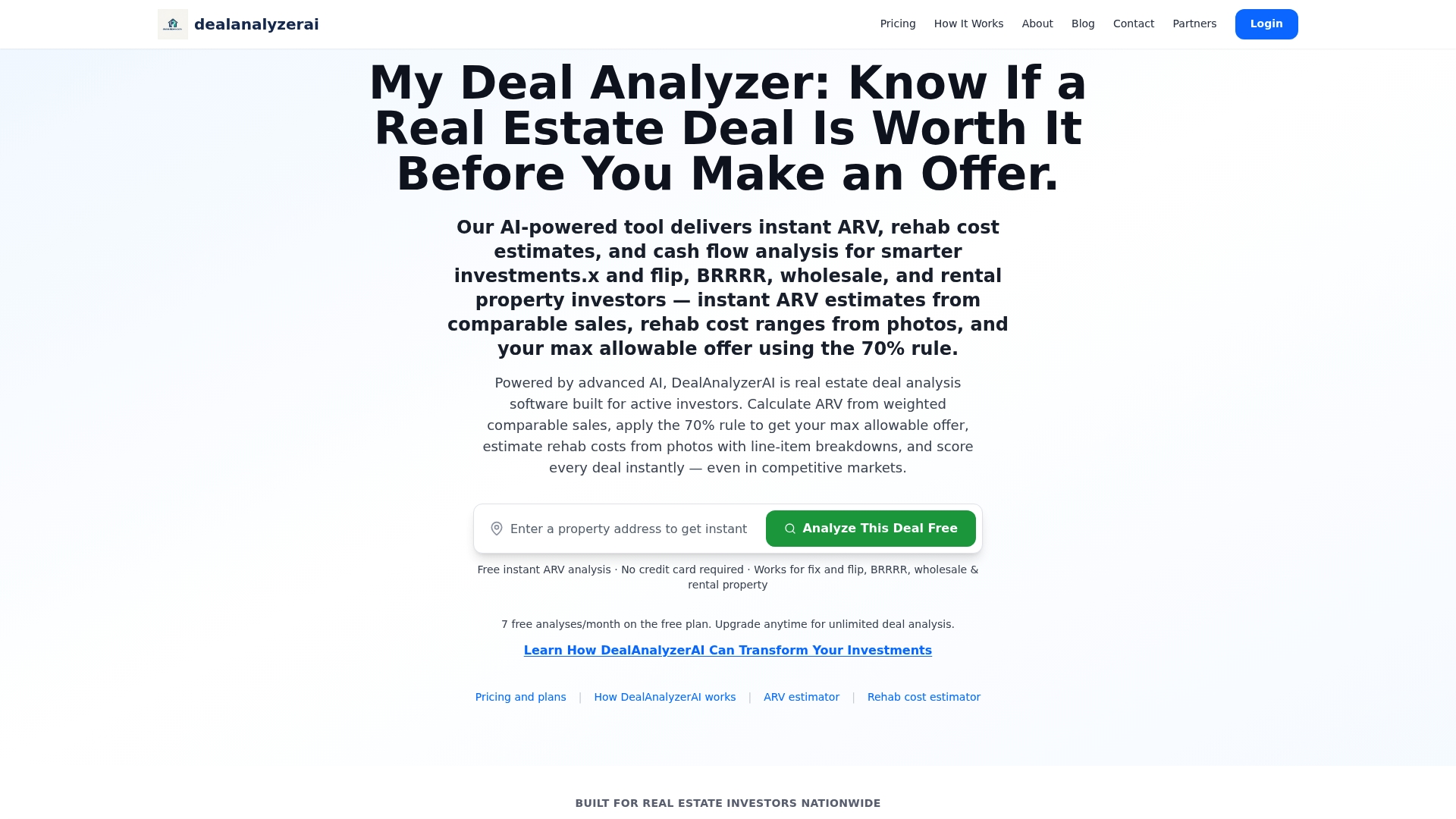
For investors screening RTP-area residential deals or small commercial conversions, the deal analyzer gives you ARV ranges, cash flow projections, and cap rate estimates in one pass. No spreadsheet juggling, no inconsistent comps. Try the free AI deal analyzer and run your first RTP property today.
Useful sources to consult
- RTP 3.0 Vision Plan (rtp.org): The authoritative land-use document defining ECC, RND, and MUN classifications. Consult before any development or covenant question.
- Research Triangle Foundation real estate page (rtp.org/real-estate): Current leasing listings, land-for-sale inquiries, and the primary contact (realestate@rtp.org) for all commercial transactions.
- Hub RTP buildings directory (hub.rtp.org/buildings): Building-by-building availability, preleasing status, and leasing contacts for the mixed-use core.
- Zillow and Realtor.com: Live residential listings with map search, sales history, and price filters for RTP-area homes.
- Long & Foster Real Estate: Regional brokerage for hands-on residential representation across Durham, Cary, and Raleigh.
| Need | Best Source |
|---|---|
| Covenant and land-use policy | RTP 3.0 Vision Plan (rtp.org) |
| Commercial leasing contacts | Research Triangle Foundation (realestate@rtp.org) |
| Hub RTP preleasing | hub.rtp.org/buildings |
| Residential listings | Zillow, Realtor.com |
| Local residential brokerage | Long & Foster Real Estate |
FAQ
What is RTP real estate, and where are listings found?
RTP real estate covers residential, office, and lab properties in and around Research Triangle Park in North Carolina. Residential listings appear on Zillow and Realtor.com; commercial and lab space is listed through the Research Triangle Foundation at rtp.org/real-estate.
Does RTP allow residential development inside the Park?
Yes, as of 2026. The RTP 3.0 framework created the Residential Neighborhood Development (RND) and Mixed-Use Node (MUN) land-use types, formally permitting residential and mixed-use projects inside the Park for the first time.
How long does a commercial lease transaction take in RTP?
Expect 4–8 weeks for lease negotiation and covenant review, plus 3–18 months for fit-out depending on lab complexity. Budget more time than a standard municipal transaction because Foundation covenant approval is a required step.
Can Dealanalyzerai help evaluate RTP investment properties?
Yes. Dealanalyzerai calculates ARV ranges, maximum allowable offers, and rehab cost estimates from property photos, making it practical for screening multiple RTP-area residential or small commercial deals quickly before committing to an LOI.
What are the biggest red flags when buying or leasing in RTP?
The main red flags are listings that use “RTP” as a marketing label but sit outside Park boundaries, buildings with insufficient power or HVAC for lab use, and covenant restrictions that limit your intended use. Always confirm the RTP 3.0 land-use classification and review covenants with the Research Triangle Foundation before signing.
Recommended
Analyze Your Next Deal with AI
Get an instant ARV estimate, rehab cost analysis, and deal score — free for 7 days.
Get Free Deal Breakdown