The MAO Formula in Real Estate: Calculate Offers Fast
Learn how the MAO formula in real estate helps investors calculate offers quickly to ensure profitability and streamline investments.
By DealAnalyzerAI Editorial Team
Real estate investing education and deal-analysis research from DealAnalyzerAI.

The MAO Formula in Real Estate: Calculate Offers Fast
The MAO (Maximum Allowable Offer) is the highest price you can pay for a property and still hit your profit target.
According to Chase, MAO is defined as the highest offer an investor can make and still turn a profit, with ARV, repair costs, fixed costs, and the 70% rule as the core inputs. Your next steps: verify ARV with sold comps, get at least two contractor bids, then run the formula before you make any offer.
Key Takeaways
The MAO formula gives you a defensible, math-based ceiling for any offer, built from ARV, rehab costs, fixed costs, and a multiplier that protects your profit margin.
| Point | Details |
|---|---|
| Core formula | MAO = (ARV × multiplier) − Estimated repairs − Fixed costs; use 70% as the standard starting multiplier. |
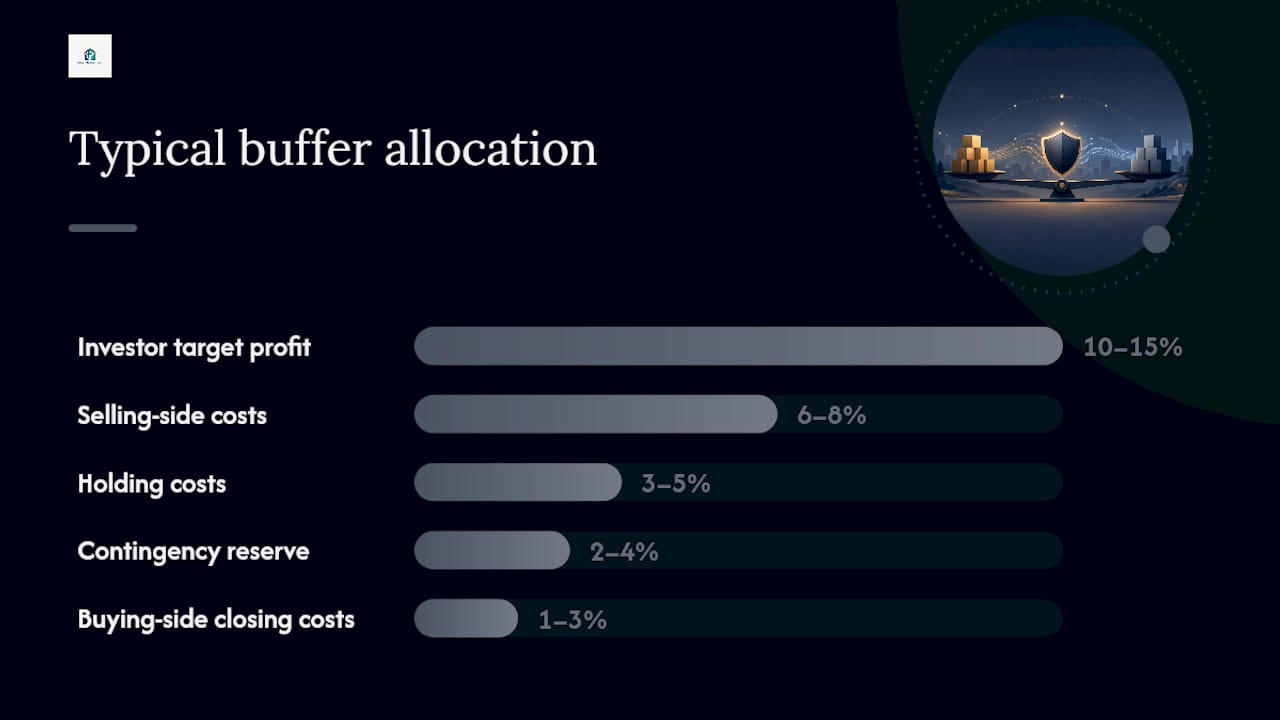
| The 30% buffer | Covers buying costs (1–3%), holding (3–5%), selling (6–8%), contingency (2–4%), and target profit (10–15%). |
| ARV accuracy is critical | Errors in ARV cascade into a wrong MAO; use 3–5 sold comps within 90 days and a half-mile. |
| Adjust the multiplier | Use 65% for wholesale or uncertain rehab, 70% for standard flips, 75% for buy-and-hold or BRRRR. |
| Dealanalyzerai | Provides AI-powered ARV ranges, photo-driven rehab estimates, and instant MAO calculations to reduce estimation variance. |
Table of Contents
- What the MAO formula in real estate actually means for investors
- How the MAO formula breaks down: the 70% rule explained
- How to estimate ARV with comps
- How to estimate repair and rehab costs accurately
- Which fixed costs belong in your MAO calculation
- Worked MAO examples and how to use a calculator
- When the MAO formula fails and how to protect yourself
- How AI tools improve MAO accuracy and speed
- Five steps to apply MAO before making any offer
- Why the 70% rule deserves more respect than it gets
- Faster MAO calculations with Dealanalyzerai’s AI tools
- Sources
- FAQ
What the MAO formula in real estate actually means for investors
MAO is not the same as list price, appraised value, or ARV. List price is what a seller wants. ARV is what the property will be worth after renovations. MAO is what the math says you can safely pay, given every cost between purchase and sale, plus your profit margin.
Practical uses for MAO in your deal flow:
- Screening leads fast: Run a quick MAO before spending time on walkthroughs. If the seller’s ask is above your MAO, move on.
- Setting a negotiation ceiling: MAO tells you exactly where to stop bidding. It removes emotion from the table.
- Communicating with cash buyers: Wholesalers use MAO to show end buyers that margin exists in the deal.
- Comparing deals side by side: A consistent formula lets you rank multiple properties on the same basis.
MAO protects your margin by forcing you to account for repair costs, holding expenses, selling costs, and a profit buffer before you commit. Skip any one of those inputs and you are guessing, not investing.
How the MAO formula breaks down: the 70% rule explained
The canonical formula, as detailed by Arvcalc, is:
MAO = (ARV × 0.70) − Estimated rehab costs
A more complete version that many experienced investors prefer subtracts fixed costs explicitly:
MAO = (ARV × multiplier) − Estimated repairs − Fixed costs
Coastal Capital Funding recommends showing both: the textbook 70% MAO and a full real-world MAO that includes hard-money carrying costs and financing, so you can see why the quick 70% calculation can be optimistic when financing is involved.
What each input means
- ARV (After-Repair Value): The market value of the property after all renovations are complete. This is your most critical input.
- Multiplier (typically 70%): Leaves a ~30% buffer to cover all non-rehab costs and profit.
- Estimated repairs: Your total rehab budget, including contingency.
- Fixed costs: Closing, holding, commissions, permits, and financing fees.
Where the 30% buffer goes
The buffer is not profit. It covers multiple cost buckets before you see a dollar of return:
| Cost Category | Typical Range (% of ARV) |
|---|---|
| Buying-side closing costs | 1–3% |
| Holding costs (interest, taxes, insurance, utilities) | 3–5% |
| Selling-side costs (commissions + closing) | 6–8% |
| Contingency reserve | 2–4% |
| Investor target profit | 10–15% |
When to adjust the multiplier
Arvcalc.com notes that the right multiplier depends on your exit strategy:
- 65%: Use for wholesale deals, slow markets, or high rehab uncertainty. Wholesalers need extra room because they subtract an assignment fee on top.
- 70%: Standard fix-and-flip in a stable market with predictable rehab scope.
- 75%: Buy-and-hold or BRRRR strategy where selling costs are lower long-term.
Experienced flippers consistently find that first-pass scopes undercount labor and materials, and a conservative rehab number is far cheaper than a surprise mid-project.*
How to estimate ARV with comps
ARV is the market value of the property after renovations are complete. Errors in ARV cascade directly into a wrong MAO, as Rocket Mortgage emphasizes. Get this number wrong and every other input in the formula is irrelevant.
The most defensible method is a comp-based analysis using recently sold data. Here is the workflow:
- Pull 3–5 sold comps from the MLS or county records, sold within the last 90 days and within a half-mile of the subject property when possible.
- Match beds, baths, and square footage as closely as you can. Aim for properties within 10–15% of the subject’s size.
- Adjust for condition and location differences. A comp that sold in better condition or on a more desirable street needs a downward adjustment.
- Calculate price per square foot for each comp, then apply the median to the subject’s post-renovation square footage.
- Cross-check with a professional appraisal or an automated valuation tool for a second opinion on high-stakes deals.
Reliable data sources include the MLS, county assessor records, sold listings on Zillow or Redfin, and professional appraisals. For ARV calculation methods compared in depth, Dealanalyzerai’s blog covers comp selection best practices in detail.
A word of caution: active listings are not comps. A house listed at $350,000 tells you what a seller hopes to get, not what buyers are actually paying. Zestimates and automated valuations can also diverge significantly from true market value in thin or rapidly shifting markets. When comps diverge widely, use the lower end of the range until you have stronger evidence.
How to estimate repair and rehab costs accurately
A single high-level guess (“about $50K to fix it up”) is the fastest way to destroy your MAO math. The right approach is a line-item scope or at least two independent contractor bids before you finalize your offer.
Build your scope around these categories:
- Structural: Foundation, framing, load-bearing walls
- Roofing: Age, condition, full replacement vs. repair
- MEP (mechanical, electrical, plumbing): Panel upgrades, HVAC replacement, plumbing re-pipes
- Kitchen: Cabinet replacement or refacing, countertops, appliances
- Bathrooms: Tile, fixtures, vanities
- Cosmetic: Flooring, paint, trim, landscaping, staging
Once you have a scope, convert it to dollars using local contractor quotes, per-square-foot benchmarks for your market, or historical costs from your own past projects. Material allowances matter too: a $3/sq ft flooring allowance and a $6/sq ft allowance produce very different totals on a 1,500 sq ft house.
Use the higher end when the property has unknowns like a questionable foundation, suspected asbestos, or an old cast-iron sewer line. ReadyDeals identifies underestimating rehab costs as the single most common mistake investors make when calculating MAO.
When getting contractor quotes, ask for itemized bids that include permits, a payment schedule tied to milestones, and a projected timeline. A quote that lacks these details is a liability, not a number you can rely on.
Pro Tip: Get at least two bids on every project. Wide variance usually signals that one contractor missed a major scope item.
Which fixed costs belong in your MAO calculation
Fixed costs are the predictable, non-rehab expenses that reduce your net proceeds. The CFPB’s guidance on closing costs reinforces the importance of documenting every expense category and keeping contingency funds available. The CFPB has also flagged mortgage closing fees as an area of scrutiny, which is worth noting when estimating buyer-side closing costs on financed deals.
For a $200,000–$400,000 ARV deal, your fixed cost categories typically include:
- Buying-side closing costs (1–3% of purchase price): Title insurance, escrow fees, transfer taxes, lender origination fees, and points.
- Holding costs (3–5% of ARV over the hold period): Hard-money interest, property taxes, insurance, utilities, and HOA fees if applicable. A six-month flip at 12% annual interest on a $150,000 loan adds $9,000 in interest alone.
- Selling-side costs (6–8% of ARV): Buyer’s agent commission, listing agent commission, seller closing costs, and any seller concessions.
- Permit and inspection fees: Varies by municipality; budget $500–$2,500 for most residential projects.
- Financing origination and points: Hard-money lenders typically charge 2–4 points upfront, which adds directly to your cost basis.
That is a number that wipes out profit if you forget to include it.
Worked MAO examples and how to use a calculator
Three scenarios show how the formula performs across different investment strategies.
Scenario 1: Standard fix-and-flip (70% rule)
ARV: $300,000 | Rehab: $40,000 | Fixed costs: $15,000
MAO = ($300,000 × 0.70) − $40,000 − $15,000 = $155,000
Scenario 2: Wholesale assignment (65% rule)
ARV: $250,000 | Rehab: $35,000 | Fixed costs: $12,000 | Assignment fee: $12,000
End-buyer MAO = ($250,000 × 0.70) − $35,000 − $12,000 = $128,000
Your contract price = $128,000 − $12,000 assignment fee = $116,000
ReadyDeals confirms that wholesalers should subtract an assignment fee of $10,000–$15,000 from the end-buyer’s MAO to arrive at a contract price that still leaves the buyer room to profit. For more on ARV’s role in wholesale pricing, the mechanics are covered in detail.
Scenario 3: Buy-and-hold / BRRRR (75% rule)
ARV: $200,000 | Rehab: $25,000 | Fixed costs: $8,000
MAO = ($200,000 × 0.75) − $25,000 − $8,000 = $117,000
| Use Case | Multiplier | Sample ARV | Rehab | MAO Result |
|---|---|---|---|---|
| Fix-and-flip | 70% | $300,000 | $40,000 | $155,000 |
| Wholesale assignment | 70% (buyer) | $250,000 | $35,000 | $116,000 (after $12K fee) |
| Buy-and-hold / BRRRR | 75% | $200,000 | $25,000 | $117,000 |
Using a calculator
When running a MAO calculator, enter ARV, your rehab estimate, and each fixed cost category separately. Review the output against your own line-item scope before treating the number as final. Calculators are fast for batch screening; deal-level diligence still requires verified comps and contractor quotes. Use conservative inputs during screening and tighten them as you gather real data.
When the MAO formula fails and how to protect yourself
The formula is only as good as its inputs. These are the situations where MAO breaks down:
- Overestimated ARV: The most common failure mode. One optimistic comp can inflate ARV by $20,000–$30,000, which cascades into an overpayment.
- Underestimated structural issues: Foundation problems, hidden mold, or outdated electrical panels rarely show up in a walkthrough estimate.
- Volatile local markets: A market that softened 5% between your offer and your sale date can erase your entire profit margin.
- Poor contractor performance: Delays extend your hold period, which increases carrying costs and compresses your return.
- Financing changes: A rate increase or a lender pulling back mid-project changes your carrying cost assumptions.
- Inaccurate hold-time estimates: Budgeting four months and taking eight doubles your holding costs.
You can accept a higher multiplier on a BRRRR deal because you are not paying selling commissions on exit.
Pro Tip: Use conditional offers and inspection contingencies on deals with structural unknowns. A $500 inspection that uncovers a $30,000 foundation issue is the best money you will spend.
How AI tools improve MAO accuracy and speed
Manual MAO calculations work, but they carry two consistent failure points: ARV variance from inconsistent comp selection and rehab underestimates from incomplete scoping. AI-powered tools address both.
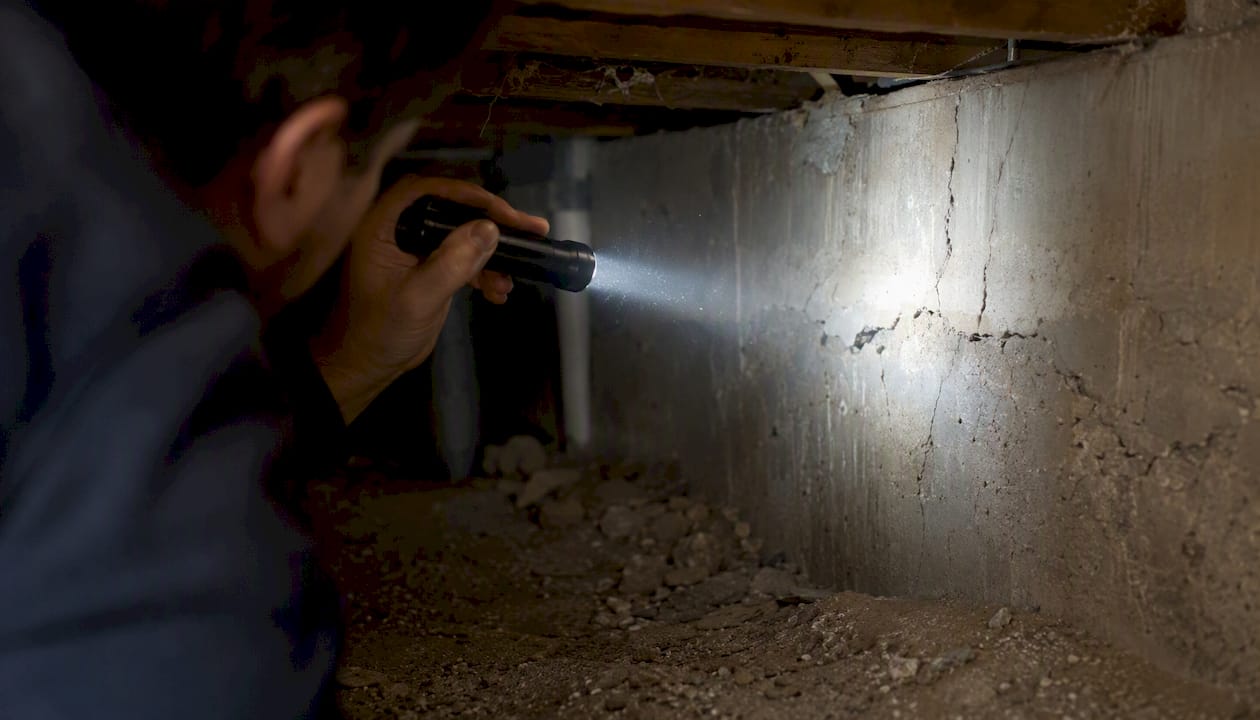
A modern AI deal analyzer pulls comparable sales automatically, applies adjustments based on property characteristics, and returns an ARV range rather than a single point estimate. That range tells you immediately how much uncertainty exists in the number. On the rehab side, photo-driven estimators analyze uploaded property images to flag visible damage, estimate material quantities, and generate line-item cost suggestions, which reduces the risk of missing a major scope item during a quick walkthrough.
Benefits of using an AI MAO calculator:
- Speed: Screen a batch of leads in minutes rather than hours.
- Consistency: The same comp criteria and cost benchmarks apply to every deal.
- Risk visibility: Automated risk flags surface issues you might miss under time pressure.
- Photo-driven rehab estimates: Reduce reliance on a single contractor’s first-pass number.
Dealanalyzerai provides AI-powered ARV ranges, photo-driven rehab estimates, instant MAO calculations, and risk flags, helping investors screen deals faster and reduce ARV and rehab variance. For investors running high deal volume, that consistency compounds across every offer you make.
Pro Tip: Use an AI calculator for initial screening, then verify the top candidates with MLS comps and contractor quotes. The AI narrows your list; your diligence confirms the winner. For a deeper look at automating property analysis, the workflow scales well once you have a repeatable process.
Five steps to apply MAO before making any offer
Follow this checklist on every deal before you submit a number:
- Estimate ARV with comps. Pull 3–5 sold comps from the MLS within 90 days and a half-mile. Calculate price per square foot and apply it to the post-renovation property.
- Get a line-item rehab estimate or two contractor bids. Cover structural, MEP, kitchen, baths, and cosmetic categories. Add a 10–20% contingency.
- Add up all fixed costs. Include buying-side closing, holding costs for your projected timeline, selling-side commissions, permits, and financing fees.
- Apply your multiplier and compute MAO. Use 70% for a standard flip, 65% for wholesale or uncertain rehab, 75% for buy-and-hold. Subtract repairs and fixed costs.
- Set your negotiation target below MAO. Open below your ceiling. MAO is the maximum you can pay; your opening offer should leave room to move up without crossing that line. For practical negotiation tactics that pair with an MAO ceiling, ClosersLeague covers the conversation side of the equation.
Document every assumption: your ARV comps, your rehab line items, your fixed cost estimates, and your multiplier rationale. When a deal goes wrong, that documentation tells you exactly where the estimate broke down, which makes your next deal more accurate.
Why the 70% rule deserves more respect than it gets
They are not entirely wrong. A flat multiplier applied without understanding what it covers can produce a MAO that is either too tight to win deals or too loose to protect profit.
The rule earns its place because it forces discipline at the screening stage, before you have spent time or money on due diligence. The investors who consistently overpay are rarely the ones who ran the formula and ignored it. They are the ones who skipped it entirely, fell in love with a property, and rationalized the numbers afterward.
That is exactly why showing both a textbook MAO and a full real-world MAO that includes carrying costs gives you a clearer picture of your actual ceiling.
Faster MAO calculations with Dealanalyzerai’s AI tools
Calculating MAO manually works for one deal. Screening ten properties a week while keeping ARV and rehab estimates consistent is where most investors lose accuracy.
Dealanalyzerai’s AI deal analyzer maps directly to every step in this guide: it generates ARV ranges from comparable sales, produces photo-driven rehab cost estimates from uploaded property images, calculates your MAO instantly, and flags risk items before you commit. You get a repeatable, consistent process across every deal you screen, not just the ones where you had time to pull comps carefully.
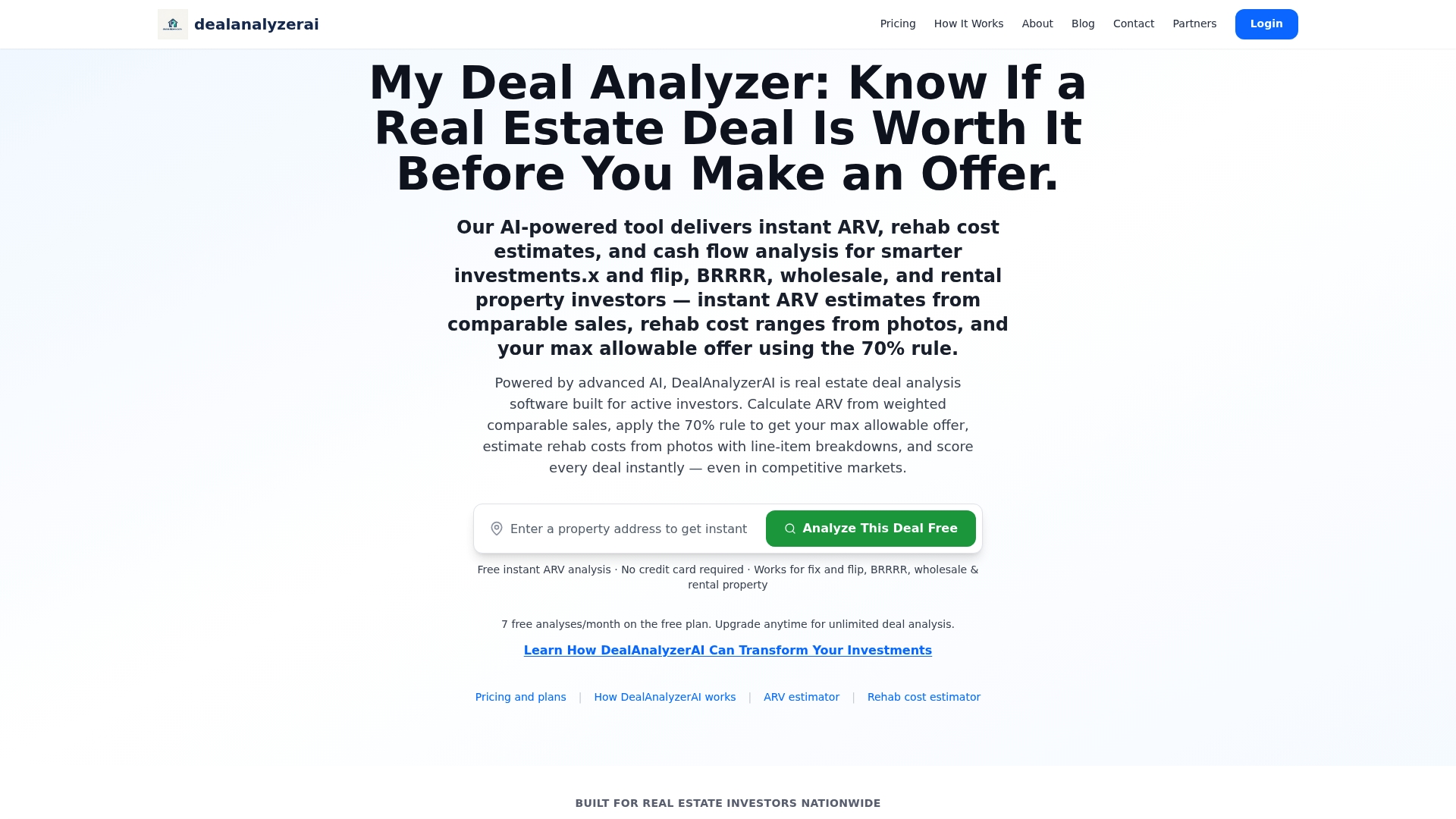
The free AI deal analyzer is available to try now. For investors who want to go deeper on the ARV side, the property analysis calculator walks through the full ARV workflow with AI-assisted comp selection. Run your next deal through the tool and see where your manual estimate and the AI output diverge.
Sources
- Maximum Allowable Offer Calculator: How to Calculate MAO (2026)
- Understanding MAO in Real Estate | Chase
- What is MAO in real estate? | Rocket Mortgage
- Max Allowable Offer (MAO) Calculator - Coastal Capital Funding
FAQ
What is the 70% rule in house flipping?
How do you calculate MAO in real estate?
MAO = (ARV × multiplier) − Estimated repairs − Fixed costs.
What is MOA in real estate?
MOA is an alternate abbreviation for MAO (Maximum Allowable Offer), the highest price an investor can pay and still meet a profit target. The terms refer to the same concept and use the same formula.
What is the 3-3-3 rule in real estate?
The 3-3-3 rule is not a standardized industry formula with a single canonical definition. Confirm the specific definition with whoever is using the term.
How does a wholesaler adjust the MAO formula?
A wholesaler calculates the end-buyer’s MAO first, then subtracts the assignment fee to arrive at the contract price. A common assignment fee is $10,000–$15,000, so if the end-buyer’s MAO is $128,000 and your fee is $12,000, your maximum contract price is $116,000.
Recommended
Analyze Your Next Deal with AI
Get an instant ARV estimate, rehab cost analysis, and deal score — free for 7 days.
Get Free Deal Breakdown