Oil Tank Property Risk: What Buyers and Sellers Must Know
Understanding oil tank property risk is crucial for buyers and sellers. Learn essential actions to protect your investment and ensure compliance.
By DealAnalyzerAI Editorial Team
Real estate investing education and deal-analysis research from DealAnalyzerAI.
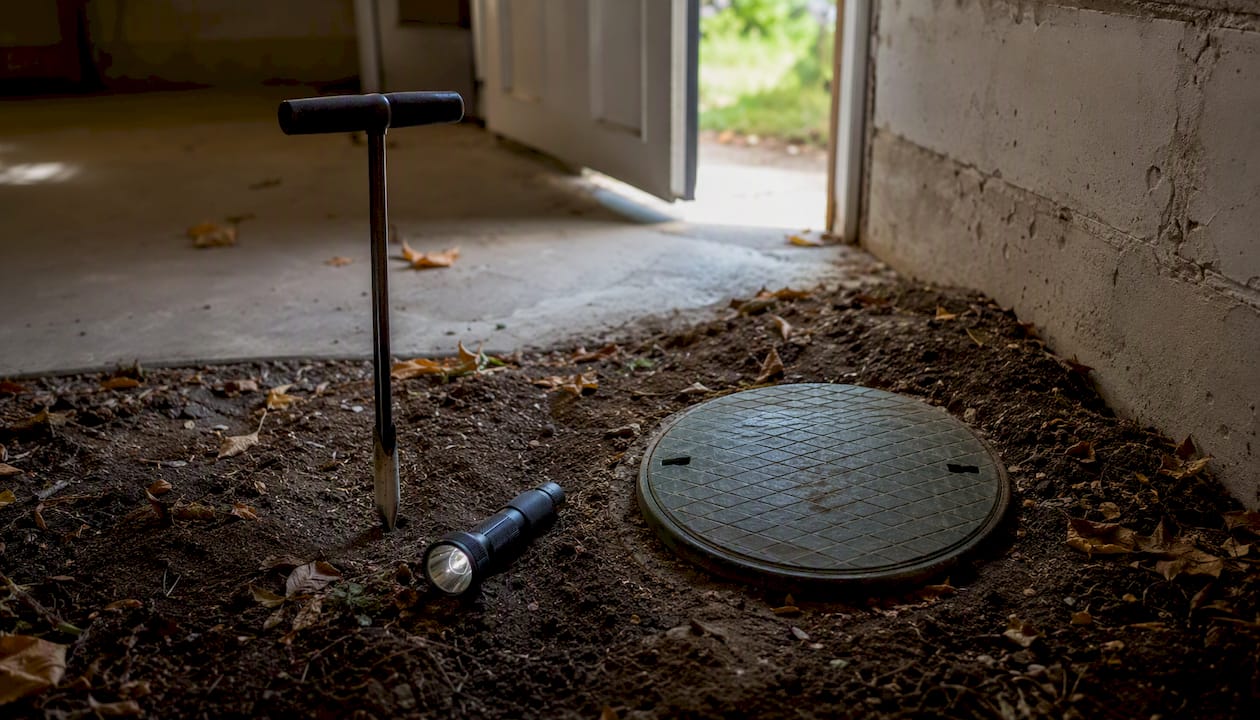
Oil Tank Property Risk: What Buyers and Sellers Must Know
An undisclosed or untested oil tank is a material liability that transfers with the deed. In most U.S. jurisdictions, the day you accept title, you assume cleanup responsibility, regardless of when the leak occurred or who installed the tank. Treat any property with a known or suspected underground storage tank (UST) as a conditional deal until you hold a certified closure letter or a verified remediation plan.
Immediate actions for buyers:
- Pause any unconditional offer until you confirm tank status through records and a physical inspection.
- Add an inspection contingency and a clean-closure contingency to your purchase agreement.
- Budget an environmental contingency of at least $10,000–$20,000 for minor contamination scenarios before you calculate your Maximum Allowable Offer (MAO).
Immediate actions for sellers:
- Disclose any known tanks in writing, even if you believe they were decommissioned years ago.
- Consider ordering a pre-listing soil test near the fill pipe or a certified decommissioning before you list.
- Gather every document you have: removal permits, contractor reports, soil test results, and closure certificates.
The bottom line: Accepting title without verifying tank status means accepting strict cleanup liability. Most states impose that obligation on the current owner regardless of fault, and standard homeowners insurance will not cover the bill.
Key Takeaways
An undisclosed or untested oil tank transfers cleanup liability to the new owner at closing in most U.S. states, making verified closure documentation the single most important document in any tank-related transaction.
| Point | Details |
|---|---|
| Buyers must add contingencies | Require a clean-closure certificate or escrow holdback before removing any contingency. |
| Sellers should disclose and document | Pre-listing certified removal eliminates tank leverage and speeds lender approval. |
| Remediation costs vary widely | Minor soil contamination cases may result in remediation costs in the low tens of thousands, while severe groundwater contamination can lead to much higher costs depending on the extent of impact. |
| Insurance rarely covers cleanup | Standard homeowners policies exclude corrosion and pollution; buy-back endorsements are rare and typically have limited coverage amounts when available. |
| Dealanalyzerai standardizes the math | Use the deal analyzer to model best/likely/worst cleanup scenarios and calculate a risk-adjusted MAO before negotiating. |
Table of Contents
- What oil tank property risk means for buyers: inspections, contingencies, and underwriting
- What sellers need to do: disclosure, pre-listing testing, and documentation
- How to identify whether a property has an underground or abandoned oil tank
- How to assess oil tank risks: inspections, soil testing, and interpreting results
- Decommissioning vs. full tank removal: which path is right for your situation?
- Typical costs and timelines for tank removal and remediation
- How insurance, lenders, and EPA rules affect who pays
- Reporting obligations, state rules, and legal exposure
- If the tank has leaked: your ordered action plan
- How to negotiate when a tank is present or suspected
- Quantifying tank risk in a property investment analysis
- Dealanalyzerai helps you price tank risk before you make an offer
- Useful resources for buyers, sellers, and investors
- Sources
- FAQ
What oil tank property risk means for buyers: inspections, contingencies, and underwriting
Buyers carry the highest exposure when a tank is present and untested. Your due diligence window, from accepted offer to closing, is the only time you can shift cost and liability back to the seller or walk away cleanly.
Start with a visual and records check
Before ordering any paid assessment, do a fast visual sweep of the property. Look for:
- Fill pipes and vent pipes protruding from the exterior foundation or near the driveway.
- Concrete patches or asphalt repairs in the yard that do not match surrounding surfaces.
- Staining, oil odor, or soft soil near the basement wall or utility area.
- Disconnected fuel lines inside the basement that terminate at nothing.
Pull the property’s permit history from the county building department and check the municipal UST registry if your state maintains one. Prior fuel delivery records, when available, can confirm tank presence and last use date.
Order the right assessments in sequence
- Visual and records screen (free to low cost): Confirm tank indicators before spending money on professional testing.
- Phase I Environmental Site Assessment (ESA): A Phase I reviews historical records, aerial photos, and site conditions to identify recognized environmental conditions (RECs). Lenders on commercial or investment transactions often require it. Cost typically runs $1,500–$3,000.
- Phase II targeted soil sampling: If the Phase I flags a REC or visual evidence suggests a release, a Phase II collects soil and possibly groundwater samples. Labs test for Total Petroleum Hydrocarbons (TPH) and BTEX compounds (benzene, toluene, ethylbenzene, xylene). Results determine whether remediation is needed.
The Pennsylvania DEP’s homeowner guidance lists soil staining, unexpected fuel odors, and unusual fuel consumption as early indicators worth investigating before a formal Phase II.
Write contingencies that protect you
Effective contingency language does three things: it defines the seller’s obligation, sets a cost cap, and specifies what documentation closes the contingency. A workable clause structure:
- Seller obligation: Seller shall remove the underground storage tank at 123 Main Street and provide a state-certified clean-closure letter from a licensed environmental contractor prior to closing.
- Escrow holdback: If removal cannot be completed before closing, $[X] shall be held in escrow pending receipt of the closure letter, not to be released until the buyer’s environmental consultant confirms clean closure.
- Cost cap: Buyer’s obligation to close is contingent on total remediation costs not exceeding $[X]. If costs exceed that cap, buyer may terminate and receive full earnest money refund.
Pro Tip: Lenders, especially conventional mortgage lenders, often require a No Further Action (NFA) letter or a certified closure certificate before releasing funds. Confirm your lender’s specific requirement in writing before you structure the contingency, because an NFA letter can take 60–180 days to obtain after remediation is complete.
Build the risk into your MAO
Fold the expected remediation cost into your investment property due diligence before you calculate your offer. A simple adjustment: subtract the probability-weighted cleanup cost from your baseline MAO.
What sellers need to do: disclosure, pre-listing testing, and documentation
Sellers who disclose early and provide documentation close faster and at higher prices than those who leave buyers to discover tank issues during due diligence. Proactive disclosure is not just a legal obligation; it is a transaction strategy.
Disclosure requirements
Most states require sellers to disclose known USTs and any known contamination in writing on the property disclosure form. Oregon DEQ guidance explicitly recommends that sellers check for tanks before listing and notes that owners remain responsible for cleanup of confirmed releases. Failing to disclose a known tank exposes you to post-closing fraud claims that no price credit can protect you from.
Pre-listing options and trade-offs
A certified closure before listing removes the tank issue from buyer negotiations entirely. Buyers cannot use an untested tank as leverage when you already hold a clean-closure certificate.
Document checklist for sellers
Collect and organize these before listing:
- Decommissioning or removal certificate from a licensed contractor.
- Soil test results and lab reports from any sampling conducted.
- Contractor invoices and disposal receipts (showing legal tank disposal).
- Any state agency correspondence, including closure letters or NFA letters.
- Prior fuel delivery records showing last delivery date and volume.
Pro Tip: A price credit at closing does not transfer cleanup liability to the buyer in most states. If the tank leaks after closing and the buyer can prove you knew about it, you may still face legal exposure. Certified closure is the cleaner exit.
How to identify whether a property has an underground or abandoned oil tank
You can often confirm tank presence in under an hour using free or low-cost methods before ordering any professional assessment.
Visual clues to check first
- Fill pipes: Short metal pipes, often capped, protruding from the foundation wall or near the driveway. They are typically 2–3 inches in diameter.
- Vent pipes: Slightly smaller pipes, often with a mesh cap, running up the exterior wall. Fill and vent pipes usually appear in pairs.
- Concrete or asphalt patches: Irregular repairs in the yard or driveway that do not match the surrounding surface, especially near the foundation.
- Basement clues: Disconnected copper or iron fuel lines terminating at a wall or floor, oil staining on the floor, or a faint petroleum odor.
- Soft or sunken soil: Depressions in the yard above a buried tank, particularly after rain.
The PA DEP guidance specifically lists soil staining, odors, and unexpected fuel use as homeowner-level indicators worth investigating immediately.
Records to pull
- County building permits: Search for heating system or fuel storage permits filed in the property’s history.
- Municipal UST registry: Many states maintain searchable databases of registered and closed USTs.
- Title search: Prior environmental liens or notices sometimes appear in title history.
- Fuel delivery records: Ask the seller or contact local fuel suppliers. Delivery frequency and last delivery date help estimate tank age and use.
Low-cost detection tools
- Ground-penetrating radar (GPR) tank sweep: A licensed tank professional runs a GPR device over the yard to locate buried metal. A basic sweep typically costs $200–$500 and takes a few hours.
- Soil vapor testing: A fast, low-cost screen for petroleum vapors in the soil near suspected tank locations.
- Handheld probes: Used by contractors to physically probe soil for tank tops in known locations.
External appearance is a poor indicator of internal condition. A tank can look intact from the outside while internal corrosion has already compromised the bottom. Professional inspection is the only reliable confirmation.
How to assess oil tank risks: inspections, soil testing, and interpreting results
Once you have confirmed or strongly suspected a tank, the assessment sequence determines your negotiating position and your legal exposure.
The four-step assessment flow
- Initial screen: Visual inspection and records check. Establishes whether a tank is present or likely.
- Phase I ESA: A licensed environmental professional reviews historical records, regulatory databases, aerial imagery, and site conditions. No soil sampling is involved. The Phase I identifies RECs that justify further investigation. Required by most lenders on non-owner-occupied transactions.
- Phase II targeted soil sampling: Soil borings are placed near the tank, fill pipe, and downgradient from the suspected release point. Samples are analyzed for TPH and BTEX compounds. If groundwater is shallow, groundwater samples may also be collected.
- Remediation planning: If Phase II results exceed state action levels, a licensed remediation contractor develops a cleanup scope and timeline.
Interpreting Phase II results
| Result | Typical Implication |
|---|---|
| Non-detect or below action levels | Clean closure possible; lender can proceed with documentation |
| TPH detected above action levels | Soil excavation required; extent determines cost |
| BTEX detected (especially benzene) | Groundwater sampling likely required; remediation scope expands |
| Groundwater impact confirmed | Extended remediation; NFA letter timeline 1–3+ years |
Detection does not automatically mean the deal is dead. Minor soil contamination above a tank is common and often remediable for $10,000–$30,000. Groundwater impact is the threshold where costs escalate sharply and closing timelines stretch.
Key signal: When benzene is detected in groundwater, remediation timelines often extend beyond one year and costs can reach six figures. That single analyte is the one to watch in Phase II results.
Decommissioning vs. full tank removal: which path is right for your situation?
These two options are not interchangeable, and choosing the wrong one can create problems at resale or with lenders.
Decommissioning (in-place closure) means the tank is cleaned, filled with an inert material (sand or foam), and abandoned in place. No excavation is required. Some states permit this for residential heating oil tanks under specific conditions.
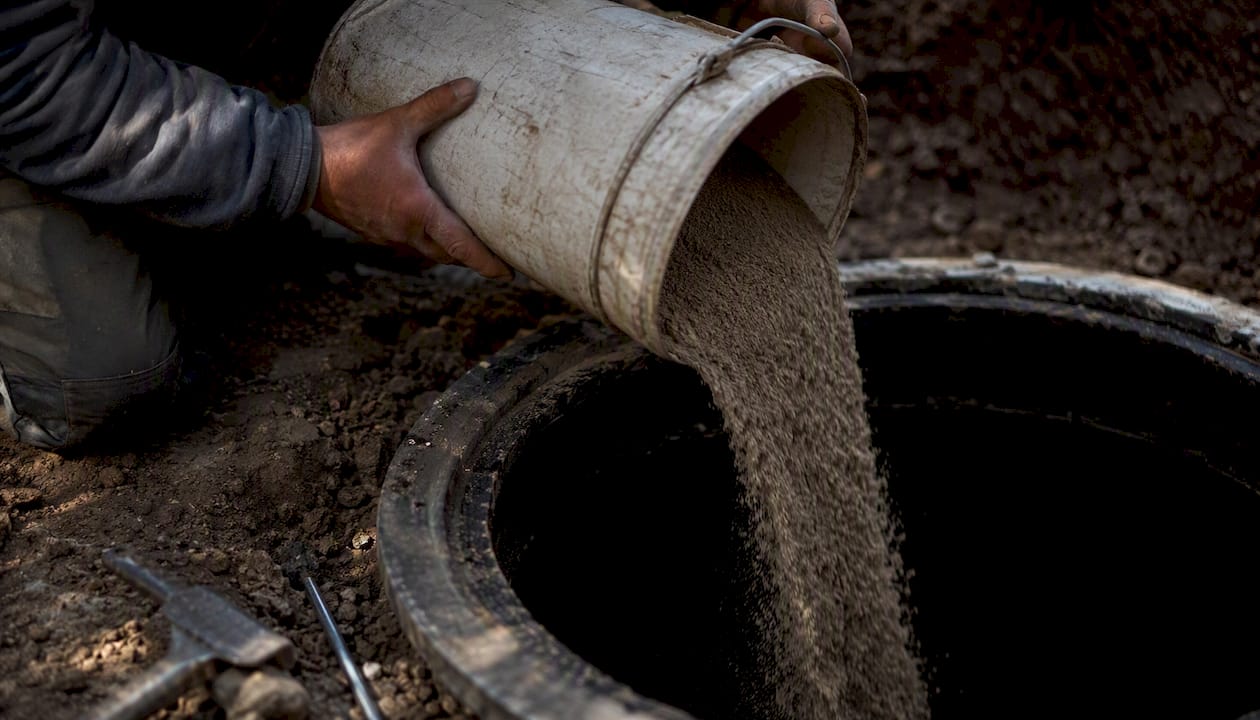
Full removal means the tank is excavated, removed from the property, and disposed of at a licensed facility. Soil samples are collected from the excavation pit to confirm clean closure.
Comparison of the two approaches
| Factor | Decommissioning (in-place) | Full Removal |
|---|---|---|
| Typical cost | $500–$1,500 | $1,500–$3,000 (no contamination) |
| Lender acceptance | Often rejected by conventional lenders | Generally accepted with closure letter |
| Long-term liability | Tank remains; future owner may face questions | Tank gone; liability risk substantially reduced |
| Resale impact | May require disclosure; some buyers resist | Clean closure letter simplifies future sales |
| Soil sampling required | Sometimes; varies by state | Yes, standard practice |
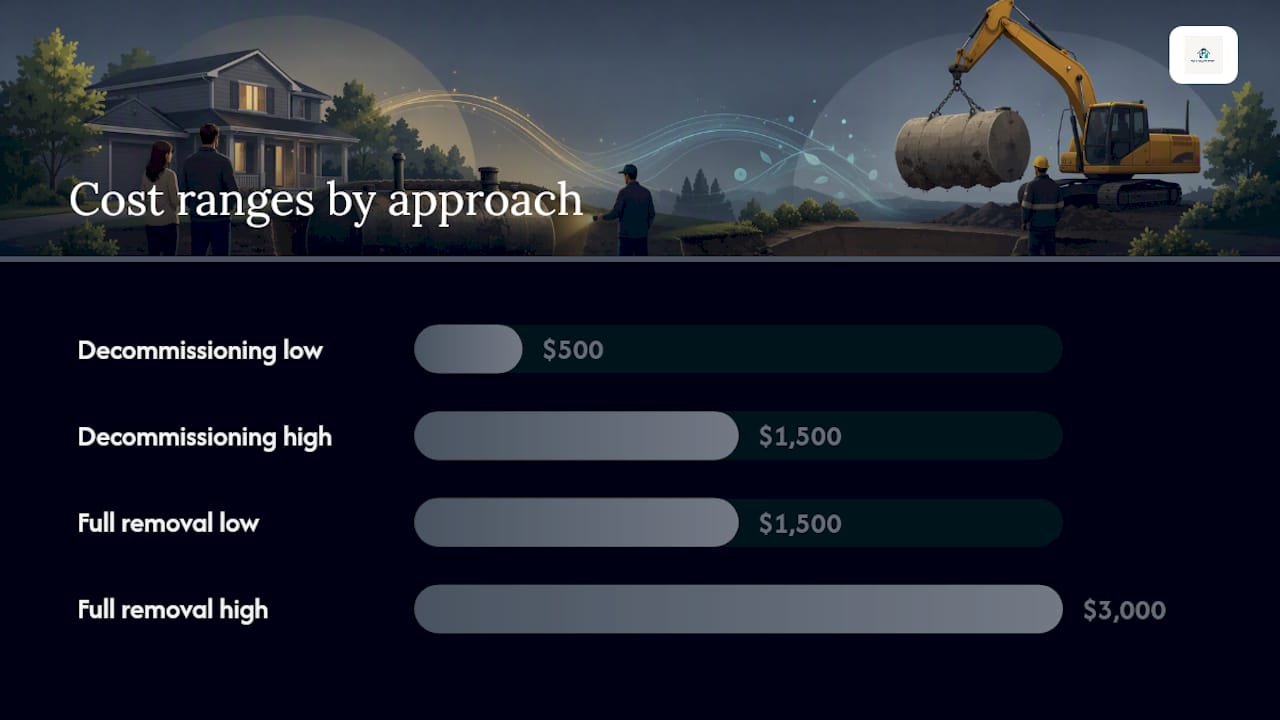
Most conventional mortgage lenders and many state DEQ programs require full removal and soil sampling to issue a clean-closure letter. In-place closure may satisfy state rules in some jurisdictions but often fails to satisfy lender underwriting requirements. Oregon DEQ outlines both options and notes that the owner’s reporting and cleanup obligations apply regardless of which path is chosen.
Required documentation for either path:
- Certified closure letter from a licensed environmental contractor.
- Soil sampling results and lab reports.
- Tank disposal receipt (for full removal).
- State agency acknowledgment or NFA letter, if required by your state.
Typical costs and timelines for tank removal and remediation
Budget conservatively. The base removal quote rarely reflects the final cost once soil sampling results are in.
Cost ranges by contamination level
| Scenario | Typical Cost Range |
|---|---|
| Simple removal, no contamination | $1,500–$3,000 |
| Removal with minor soil excavation | $10,000–$20,000 |
| Moderate contamination, limited groundwater | $30,000–$75,000 |
| Severe groundwater migration | $150,000–$350,000+ |
These ranges reflect documented case data from state remediation records. Severe groundwater cases can exceed $350,000 when contamination has migrated under foundations or toward neighboring properties.
Typical timeline from discovery to closure
- Tank sweep and initial assessment: 1–5 days.
- Phase I ESA: 1–2 weeks.
- Phase II soil sampling and lab results: 2–4 weeks (lab turnaround is often 10–15 business days).
- Remediation execution: 2 weeks to 18+ months depending on scope.
- State review and NFA letter: 30 days to 2+ years for complex cases.
- Lender hold or closing delay: 60–180 days is common when remediation is required before closing.
Key cost drivers
- Tank age and material (steel tanks corrode faster than fiberglass).
- Accessibility (tanks under driveways, decks, or additions cost more to excavate).
- Contamination level and extent of soil and groundwater impact.
- Proximity to structures, utilities, or property lines.
- State permit fees and contractor oversight requirements.
- Disposal costs for contaminated soil (charged by the ton).
Quote-request checklist
When getting contractor bids, ask each bidder to itemize:
- Excavation labor and equipment.
- Tank removal and licensed disposal fees.
- Soil sampling and laboratory analysis costs.
- State permit fees and oversight charges.
- Contingency for additional excavation if contamination is found.
Get at least three quotes. Prices vary significantly by region and contractor.
How insurance, lenders, and EPA rules affect who pays
The short answer: standard homeowners insurance almost certainly will not cover oil tank cleanup, and lenders will not close without documentation that the risk is resolved.
What homeowners insurance typically excludes
Standard homeowners policies commonly exclude oil tank leaks, corrosion-related failures, and environmental cleanup costs. Insurers classify gradual corrosion as a maintenance issue, not a sudden accidental loss. Limited pollution “buy-back” endorsements exist, but they are rare and typically capped at $50,000–$100,000 when available, per NJ Department of Banking and Insurance guidance. Many insurers also require disclosure of known USTs and may exclude coverage or decline to renew policies on properties with active tanks.
For a full picture of common homeowners policy exclusions, oil tank contamination sits alongside flood and earthquake as one of the gaps most buyers do not discover until they file a claim.
EPA UST financial responsibility requirements
The EPA’s financial responsibility guidance sets minimum coverage requirements for regulated UST owners and lists policy features to verify, including first-dollar coverage, extended reporting periods, and endorsements required under 40 CFR 280.97(b). While residential heating oil tanks are often exempt from federal UST regulations, the EPA guidance is the reference point lenders and environmental consultants use when sizing required coverage or escrow for regulated tanks.
Coverage gap warning: Many homeowners discover their policy excludes oil tank cleanup only after a release is confirmed. By that point, the cleanup obligation is already theirs, and out-of-pocket costs can reach six figures without specialized pollution liability coverage in place.
How lenders treat active or suspected tanks
- Conventional lenders typically require a clean-closure letter or NFA letter before funding.
- FHA and VA loans have strict property condition requirements; an active or unresolved UST often disqualifies the property.
- Some lenders accept a remediation escrow holdback in lieu of pre-closing cleanup, but the escrow must be sized to cover worst-case costs.
- Absence of an NFA letter can stall closings for 60–180 days after remediation is complete.
Negotiation options when insurance won’t cover cleanup
- Seller-funded escrow: Seller deposits estimated cleanup costs into escrow at closing; funds release when closure letter is received.
- Price reduction: Buyer accepts a lower purchase price to offset expected remediation costs. Note that a price credit does not transfer legal cleanup liability.
- Dedicated remediation escrow: A third-party escrow account managed by the environmental contractor or a title company, with defined release conditions tied to state closure documentation.
For specialized pollution liability coverage options beyond standard homeowners policies, commercial environmental insurers write policies specifically for UST risks, including coverage for third-party claims and regulatory-required cleanup.
Reporting obligations, state rules, and legal exposure
Legal obligations kick in the moment you discover a release, not when you decide to act on it.
Immediate reporting obligations
Most states require property owners to report a confirmed or suspected petroleum release to the state environmental agency within a defined timeframe. Oregon DEQ, for example, requires reporting within 72 hours of discovering a release. Failure to report on time can result in penalties that compound the cleanup cost and may disqualify you from state reimbursement programs.
Steps to verify state compliance
- Identify your state’s UST program. Search “[your state] DEQ UST program” or “[your state] underground storage tank reporting.”
- Confirm the reporting timeframe for residential heating oil tanks in your state.
- Request a copy of any existing closure or NFA letter from the seller before closing.
- Verify the contractor’s license with your state environmental agency before hiring.
- Confirm that the closure documentation meets your lender’s specific requirements.
Owner liability basics
- Most states impose strict liability on the current property owner for cleanup, regardless of when the leak occurred or who installed the tank.
- Liability does not require proof of negligence. Owning the property is sufficient.
- State reimbursement funds exist in some jurisdictions but carry strict eligibility rules. New Hampshire’s Petroleum Reimbursement Fund, for example, provides up to $500,000 for residential leaks but requires prior compliance, pre-approval, and proof of insurance gaps. Many investors are ineligible.
- A real estate risk flags review before closing is the most reliable way to catch undisclosed tank indicators before they become your legal problem.
Key resources to check
- Your state DEQ or environmental agency’s UST program page.
- State UST closure registry (searchable databases in many states).
- EPA’s UST program page at epa.gov/ust for federal regulatory context.
- State insurance department for information on available pollution endorsements.
If the tank has leaked: your ordered action plan
A confirmed release is a defined legal event. Move fast and document everything.
Ordered response steps
- Stop additional deliveries immediately. Do not accept any fuel delivery to a leaking or suspected leaking tank. Additional product makes the cleanup larger and more expensive.
- Notify your state environmental agency. Report the release within the required timeframe for your state. Get a case number and document the date and time of your report.
- Hire a licensed remediation contractor. Your state environmental agency maintains a list of licensed contractors. Do not use an unlicensed contractor; their work may not satisfy state closure requirements.
- Document all work and receipts. Every soil sample, lab report, contractor invoice, and agency communication becomes part of your closure file. Missing documentation can delay your NFA letter by months.
- Notify your lender. If the property is under contract or mortgaged, your lender needs to know. Failure to disclose a known release can trigger loan default provisions.
The remediation pathway
- Site characterization: Soil and groundwater sampling to define the extent of contamination.
- Cleanup scope development: Licensed contractor or environmental consultant prepares a remediation work plan.
- Remediation execution: Soil excavation, groundwater treatment, or both, depending on scope.
- Confirmation sampling: Post-cleanup samples confirm contamination is below state action levels.
- State closure review: State agency reviews documentation and issues an NFA letter or closure certificate.
Practical reality: Remediation costs documented in state case records range from $10,000–$20,000 for minor soil excavation to $150,000–$350,000 or more for severe groundwater migration. The difference between those outcomes often comes down to how quickly the release was discovered and reported.
Common outcomes by contamination severity
- Minor soil contamination (no groundwater): Excavation, disposal, confirmation sampling. Closure in 2–6 months. Cost: $10,000–$30,000.
- Moderate contamination with limited groundwater: Extended sampling, possible pump-and-treat. Closure in 6–18 months. Cost: $30,000–$75,000.
- Severe groundwater migration: Multi-year remediation, potential third-party claims. Cost: $150,000–$350,000+.
Who to call and what they do
- Licensed environmental contractor: Manages site characterization, cleanup, and closure documentation.
- State UST program: Receives your report, assigns a case number, and reviews closure documentation.
- Real estate attorney: Advises on disclosure obligations, lender notifications, and liability allocation.
- Lender: Must be notified; will determine whether to proceed, require escrow, or pause funding.
How to negotiate when a tank is present or suspected
The tank is a known variable. Your job is to price it, allocate it, and document the allocation in the contract.
Contract language that works
- Seller removal obligation: “Seller shall, at Seller’s sole expense, remove the underground storage tank located at [address] and provide Buyer with a state-certified clean-closure letter from a licensed environmental contractor no later than [date] prior to closing.”
- Escrow holdback structure: “In the event tank removal is not completed prior to closing, $[X] of the purchase price shall be held in escrow by [escrow agent] and released to Seller only upon Buyer’s receipt and approval of a state-certified closure letter.”
- Cost cap and termination right: “Buyer’s obligation to close is contingent upon total tank removal and remediation costs not exceeding $[X]. If confirmed costs exceed this amount, Buyer may terminate this Agreement and receive a full refund of earnest money.”
The worst-case scenario from the state remediation cost data justifies conservative sizing.
When to walk away
Red flags that suggest unacceptable risk:
- Fill pipes present but seller has no documentation of decommissioning or removal.
- Inconsistent or missing permit records for a property built before 1990.
- Seller unwilling to allow Phase II testing or to fund an escrow holdback.
- Lender has declined to proceed without pre-closing cleanup and seller cannot complete it in time.
- Phase II results show groundwater impact and the seller’s remediation timeline extends past your financing commitment.
How investors should underwrite the exposure
For a property investment risk assessment, model the tank as a probability-weighted cost adjustment to your MAO. Assign a probability of contamination based on tank age, visual evidence, and records, then multiply by your expected cleanup cost for each scenario. Subtract the result from your baseline MAO before negotiating.
Quantifying tank risk in a property investment analysis
Treating every tank property as a unique black box leads to inconsistent offers and missed deals. A standardized model gives you a repeatable framework across your deal flow.
Variables to model
- Probability of contamination (p): Based on tank age, material, visual evidence, and records. A 30-year-old steel tank with no closure documentation might carry a 50–70% contamination probability.
- Expected cleanup cost distribution: Use the three-scenario structure below.
- Time-to-resolution impact: Carrying costs during remediation (mortgage, taxes, insurance) add to total exposure.
- Lender remediation requirements: NFA letter requirement adds 60–180 days to your hold period.
MAO adjustment example
Assume a property with a baseline MAO of $200,000 and a suspected 40-year-old steel tank with no closure documentation.
Adjusted MAO: $200,000 minus $69,500 = $130,500. That is the number to negotiate from, not $200,000.
Add carrying cost for the expected remediation timeline (6–18 months at your holding cost rate) on top of the weighted cleanup cost for a complete picture.
Dealanalyzerai’s deal analysis tool lets you standardize these inputs across multiple properties, compare best/likely/worst scenarios side by side, and flag tank indicators automatically when they appear in property data, so you are not rebuilding this model from scratch on every deal.
What repeated experience with tank properties actually teaches you
The lesson that comes up most consistently on tank deals is this: verbal assurances from sellers about prior decommissioning are worth nothing at the closing table. Sellers often genuinely believe a tank was “taken care of” decades ago, but without a certified closure letter and soil test results, that belief is not a legal defense for the buyer who accepts title.
The non-obvious move that changes your negotiating position: request prior fuel delivery records from the seller or directly from local fuel suppliers. Delivery frequency and the last delivery date tell you how long the tank was in active use and when it was likely abandoned. A tank that received its last delivery in 1987 and sits in clay soil has a very different risk profile than one last filled in 2005 in sandy soil near a water table. Use that information to target your Phase II sampling locations and to sharpen your probability estimate in the MAO model.
Dealanalyzerai helps you price tank risk before you make an offer
When you are screening multiple properties a week, rebuilding a tank-risk model from scratch on every deal costs time you do not have. Dealanalyzerai’s AI-powered deal analyzer lets you run a risk-adjusted MAO in minutes, with standardized inputs for remediation probability, cleanup cost scenarios, and carrying cost impact. Upload property photos and the tool flags environmental risk indicators alongside ARV estimates and rehab costs, so tank exposure shows up in your numbers before you make an offer, not after you accept title.

Run your next tank property through a risk-adjusted MAO calculation and see exactly how contamination scenarios affect your offer price. Free to start, no commitment required.
Useful resources for buyers, sellers, and investors
These primary sources are the ones to check before you make any decision about a tank property:
- EPA UST program: Federal regulatory framework for underground storage tanks, including financial responsibility requirements and state program contacts.
- EPA financial responsibility guidance: Fact sheet on required coverage minimums, policy features to verify, and how to find insurers that write UST policies. Lenders and environmental consultants reference this document when sizing escrow requirements.
- Oregon DEQ: Buying or Selling a Home with a Heating Oil Tank: A clear state-level example of seller obligations, decommissioning options, and the 72-hour reporting requirement for confirmed releases. Use it as a model for what your own state DEQ likely requires.
- Pennsylvania DEP: Tips for Residential Heating Oil Tank Owners: Homeowner-level inspection checklist and step-by-step response guidance for suspected leaks.
- NJ Department of Banking and Insurance: Oil Tanks: Explains standard homeowners policy exclusions for oil tank leaks and the limits of buy-back endorsements.
- First Home Start Guide: NH Investment Property with Underground Oil Tank: Practical cost ranges from state remediation records and an explanation of state reimbursement fund eligibility rules.
- Your state DEQ UST program page: Search “[your state] DEQ underground storage tank” to find your state’s closure registry, reporting requirements, and licensed contractor lists.
What to request from a seller: A state-certified closure letter or NFA letter, soil test results, and tank disposal receipts. That combination is what clears most lender requirements and limits your post-closing exposure.
This article is general information, not a substitute for advice from a qualified financial advisor. Consult a qualified financial professional about your own circumstances before acting on anything here.
Sources
- Dollars and Sense: Financial Responsibility Requirements for Underground Storage Tanks — EPA
- Oil tanks — NJ Department of Banking & Insurance
- Buying or Selling a Home with a Heating Oil Tank — Oregon DEQ
- How to analyze a New Hampshire investment property with an underground oil tank — First Home Start Guide
- Tips For Residential Heating Oil Tank Owners — Pennsylvania Department of Environmental Protection
- Does homeowners insurance cover oil tank leaks? — ProGuard
FAQ
Is it bad to buy a house with an oil tank?
Buying a house with an oil tank is manageable if you have verified closure documentation and clean soil test results. Without those documents, you are accepting an open-ended cleanup liability that can range from $10,000 to over $350,000 depending on contamination severity.
Can you sell a house with an oil tank?
Yes, but disclosure is legally required in most states, and many conventional lenders will not fund a purchase without a clean-closure letter or NFA letter. Sellers who complete certified removal before listing avoid the negotiation delays and price reductions that typically follow buyer-discovered tanks.
Does homeowners insurance cover oil tank removal?
Standard homeowners policies typically exclude oil tank leaks and environmental cleanup because insurers classify gradual corrosion as a maintenance issue rather than an accidental loss. Limited pollution buy-back endorsements exist but are usually capped at $50,000–$100,000 and carry preconditions that many claims fail to meet.
How close to a house can an oil tank be?
Placement requirements vary by state and local fire code, but most jurisdictions require a minimum clearance from structures, property lines, and ignition sources. Check your state fire marshal’s regulations and local building code for the specific setback distances that apply to your property.
What is the first step if you discover a leaking oil tank?
Stop any additional fuel deliveries immediately, then report the release to your state environmental agency within the required timeframe (72 hours in some states). Hire a licensed remediation contractor and document every step from that point forward, since the closure file you build now is what eventually produces your NFA letter.
Recommended
Analyze Your Next Deal with AI
Get one free ARV range from comparable sales, then enter an email to reveal aggregate market insights. Full property analysis is available on paid plans.
See Your Free ARV Range